Navigation
Rob Hall on Everest (Who Was He & How Did He Die?)
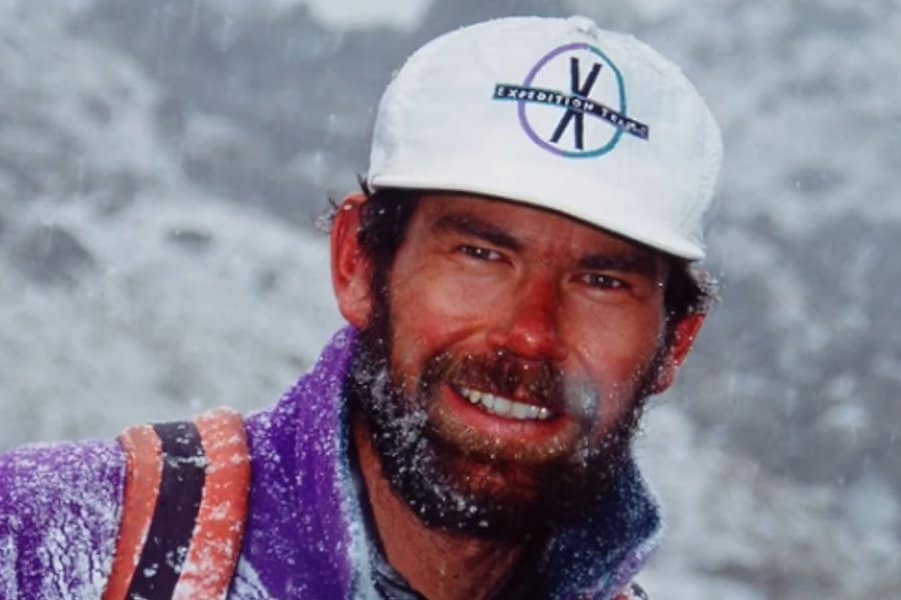
Have you ever wondered what it takes to climb the highest mountain in the world? Rob Hall did—and he not only climbed Mount Everest himself but also helped many others reach the top. Who was Rob Hall? He was a celebrated New Zealand mountaineer, a savvy entrepreneur, and a tragic figure in the famous 1996 Everest disaster. Why does his story matter to us?
Because it’s more than just a tale of someone who died on Everest—Rob Hall’s life shows the fragile line between great ambition and humble respect on the roof of the world (the top of Mount Everest).
In this article, we’ll explore his journey: from his early life and climbing roots through his rise as a mountain guide and leader to the fateful 1996 expedition, the ethical dilemmas it revealed, and the legacy he left for future trekkers and climbers.
Mount Everest towers above the surrounding peaks, earning its nickname “the roof of the world.” Rob Hall stood on this summit five times in his career.
Mount Everest is Earth’s tallest mountain at 8,848.86 meters (29,031 feet). It dominates the horizon with icy slopes and fierce winds. Even the bravest climbers like Rob Hall treat it with awe and respect. Keep this colossal height in mind – it’s the stage for Rob’s greatest triumphs and his final tragedy.
What lies ahead: We’ll begin with Rob’s childhood in New Zealand and how he fell in love with mountains. Then we’ll see how he turned his passion into a guiding company to help others climb Everest. We’ll relive the dramatic events of May 10–11, 1996, when a deadly storm struck. We’ll discuss the tough questions raised about guiding and mountain ethics. Finally, we’ll look at how Rob Hall is remembered today—in books, movies, and on the mountain itself.
Early Life and Climbing Roots of Rob Hall
Rob Hall, "Robert Edwin Hall," was born in 1961 in Christchurch, New Zealand, the same country that produced Everest pioneer Sir Edmund Hillary. Growing up in the land of snowy peaks and rugged adventures, young Rob found his playground in the Southern Alps of New Zealand.
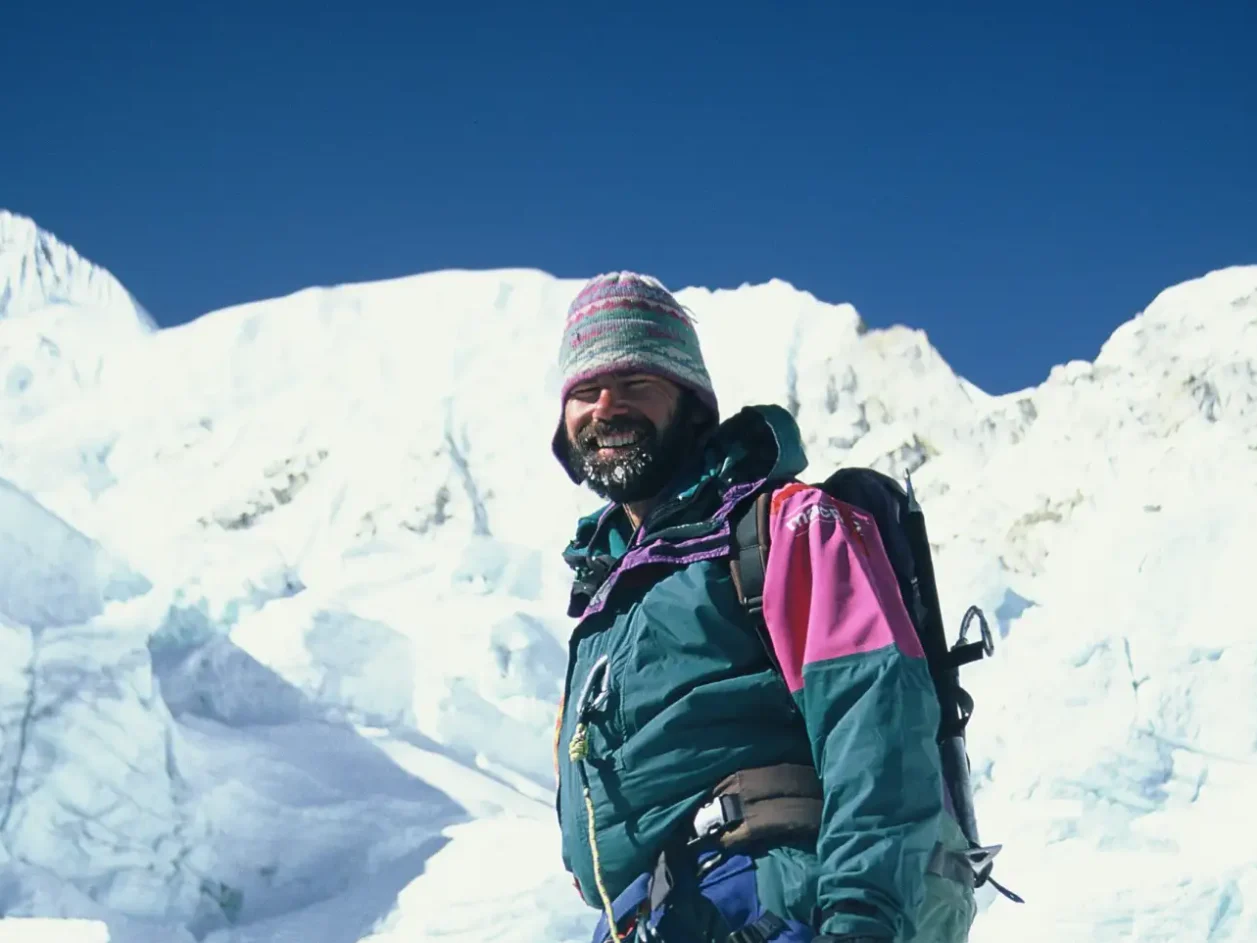
Image via Adventure Consultants
Can you imagine climbing big mountains while still in your teens? Rob could. As a boy, he hiked and learned to climb on local mountains, developing strength and skill. By the time he was 21 years old, he had already tackled some of the world’s highest challenges—he made a daring ascent of Ama Dablam in Nepal and other formidable peaks. This early start showed Rob’s courage and love for high places.
New Zealand’s mountaineering culture had a strong influence on Rob Hall’s character. Kiwis (New Zealanders) are known for their “can-do” adventurous spirit, inspired by heroes like Hillary, who first conquered Everest. Rob learned to be resourceful, humble, and determined—all traits that would serve him well later on Everest. He believed in enjoying the journey of climbing, not just the destination.
As he once wrote after a successful climb, “What a fantastic planet we live on, and how privileged I am to journey across its mountains." This joy in the journey kept Rob grounded even as he set his sights on the world’s tallest peaks.
From Climber to Guide: The Birth of Adventure Consultants
Rob’s adventures around the globe soon turned into a mission: helping others experience the mountains he loved. In 1989, he met Gary Ball, a fellow New Zealand climber who became his best friend and climbing partner. Together they did something incredible—they climbed the “Seven Summits” (the highest mountain on each of the seven continents) in just seven months.
This achievement made headlines and turned them into celebrities in New Zealand. Rob and Gary realized they had the skills to climb the world’s hardest mountains and the knowledge to lead others safely. So, in 1992, they founded a guiding company called Adventure Consultants. Their vision was clear: make Everest and other big mountains accessible to ordinary people—safely and ethically.
Adventure Consultants (AC) was one of the pioneers of commercial Everest expeditions. In the early 1990s, very few non-professional climbers had a chance to climb Everest. Rob Hall wanted to change that by providing expert guides, training, and support so that clients (paying climbers) could attempt the summit.
In 1992, Rob and Gary successfully guided six clients to the top of Everest on one trip. Suddenly, the idea of guided Everest climbs became real. As Rob put it, Everest didn’t have to be only for elite climbers—with the right help, determined adventurers could try it too.
Tragically, Gary Ball died in 1993 from a sudden illness (high-altitude pulmonary edema) while climbing Dhaulagiri in Nepal. Rob was devastated to lose his best friend (Gary died in Rob’s arms on the mountain), but he did not give up their shared dream. Rob continued running Adventure Consultants on his own, honoring Gary’s memory.
By 1996, Rob Hall had guided 39 climbers safely to the summit of Everest—an astonishing track record at the time. Clients from all over the world trusted him because of his reputation for putting safety first.
Despite charging a hefty fee of about US $65,000 per person (much higher than some other guides), people signed up because they believed Rob Hall would give them the best shot at the summit and bring them back alive. This balance of business and safety became Rob’s hallmark: he was running a company, but not at the expense of human life.
A Leader on the Mountain
Rob Hall wasn’t just a strong climber; he was a natural leader in the harshest conditions. On an expedition, he took charge with a calm, confident style. He was known for being an upbeat decision-maker who always tried to solve problems fairly and quickly.
In the chaos of a high-altitude camp, people would look to Rob for guidance. He had a friendly smile and a steady voice that reassured climbers when things got tough. “Safety first” was Rob’s golden rule, and he usually meant it.
For example, in 1995 he turned his whole Everest team around just shy of the summit because the weather was turning bad and it was late in the day. Imagine having to tell clients who paid so much and came so far, “No, we must go down now.” Rob did exactly that, believing that getting everyone down alive was more important than reaching the top at all costs.
At the same time, Rob was only human—he felt responsibility and even pressure. His leadership had a human touch: he joked with his team, listened to their worries, and treated the Sherpa guides with respect and gratitude. He also made choices he believed were ethical.
For instance, Rob insisted on using bottled oxygen for himself and his guides whenever above 8,000 m (“the death zone”). He had seen climbers try to go without oxygen and get dangerously weak or frostbitten. Rob didn’t view using oxygen as a weakness; rather, it was a tool to stay strong and help weaker team members if needed. This contrasted with some climbers who prided themselves on not using oxygen—a difference of philosophy that would become important in 1996.
Rob Hall led many notable expeditions before 1996. He reached the summit of Everest four times between 1990 and 1995, more than almost any other Westerner by that time. He also guided climbs on other 8,000-meter peaks like Cho Oyu and led trips in Antarctica and the Andes.
His success brought fame in the mountaineering world and even honors—in 1994, Rob was awarded the Member of the Order of the British Empire (MBE) for his services to mountaineering. But balancing business and mountaineering integrity was a constant tightrope.
Rob knew that happy clients and successful summits kept his company alive, yet he maintained that no summit was worth a life. He carefully planned expeditions with extra days, spare oxygen, and strict turnaround times (a set time to turn back on summit day, even if you haven’t reached the top). These plans would be put to the ultimate test in the spring of 1996.
1996 Everest Disaster: A Timeline
A Crowded, Fateful Climb
The year 1996 brought a very busy Everest season. Numerous teams from around the world were on the mountain at once. Rob Hall’s Adventure Consultants expedition had eight clients and three guides (including Rob himself).
There was another guided team called Mountain Madness, led by American Scott Fischer, and expeditions from Taiwan, India, and others—all aiming to summit in early May.
On May 10, 1996, these teams decided to go for the top, since a brief break in the weather was forecast. Picture more than 30 climbers from different groups all heading up on the same day! In fact, about 33 climbers were attempting to reach the summit on May 10. This would lead to traffic jams high on the mountain.
Starting before dawn, Rob Hall’s team left Camp IV (the last camp at about 8,000 m on the South Col). The climb from there to the summit is the final push—and it’s extremely difficult. Early on, the climbers hit a major delay at a famous obstacle called the Hillary Step (a steep rock wall near the summit).
Normally, fixed ropes should have been put in place there ahead of time. But when Rob’s group arrived, no ropes were installed, and everyone had to wait about an hour while the guides set up new ropes.
This delay cost precious time and oxygen. Meanwhile, so many climbers on a single rope caused a bottleneck—climbers were literally standing in line in the death zone waiting to go up. As the day wore on, people were climbing far too slowly.
By 2:00 PM (2 in the afternoon), some climbers were still not at the summit. This was very dangerous – 2:00 PM was the turnaround time Rob Hall himself had set (the latest time to head back down to reach camp before night).
Yet many, including some of Rob’s clients, ignored that deadline in order to reach the top. Rob Hall himself reached the summit early in the afternoon (he was so experienced he could still summit even with delays).
But one of his clients, Doug Hansen, was very far behind. Doug was a postal worker from the USA who had attempted Everest with Rob the year before and came heartbreakingly close.
Rob had turned Doug around in 1995 for safety, and Doug had returned in 1996 for another try. Perhaps remembering that, Rob waited for Doug. Rob’s chief Sherpa guide, Ang Dorje, encountered Doug struggling near the Hillary Step around 3:00 PM and ordered him to turn around for his own safety. But Doug refused, shaking his head and pointing upward—he was determined to reach the summit this time.
Critical Decisions on the Summit Ridge
When Rob Hall found Doug Hansen below the summit late in the day, he faced a gut-wrenching decision. It was long past the safe turnaround time, oxygen supplies were running low, and a storm was brewing in the sky. Rob made the fateful choice to stay with Doug and try to help him reach the summit and come down.
He reportedly said he would not leave Doug behind. This was the ultimate test of a guide’s responsibility: client safety vs. personal survival. Rob’s team radioed him from below, urging him to leave Doug and save himself, but Rob refused. Around 4:30 PM, Rob radioed Base Camp to say Doug had run out of oxygen and could not move on his own.
Rob himself was now stranded high up at the South Summit (about 8,750 m) trying to keep Doug alive. He asked for extra oxygen to be sent up. But by that time, a fierce blizzard hit the mountain in the late afternoon and visibility vanished. Other climbers were caught in the storm all along the route. Chaos ensued as darkness fell.
All through the night of May 10, Rob Hall and Doug Hansen were stuck in the storm near the summit. At one point, another guide from Rob’s team, Andy Harris, bravely climbed up from Camp IV in an attempt to bring oxygen and help Rob and Doug.
Andy managed to reach Rob (an incredible feat in those conditions), but some time during the night Andy Harris disappeared – likely swept off the ridge or falling to his death.
Early the next morning, at 4:45 AM on May 11, Rob Hall’s weak voice came on the radio again. He calmly reported that “Doug is gone” – Doug Hansen had died during the night, succumbing to the cold and lack of oxygen.
Rob also said that Andy Harris had come and then vanished. By this time, Rob Hall himself was in terrible shape: he had no supplemental oxygen left (his oxygen regulator was clogged with ice), and he was suffering severe frostbite on his hands and feet. He was completely alone, high on Everest, with a ferocious storm raging.
Yet even in this dire situation, Rob Hall remained remarkably calm and brave. Later that morning, he got his radio to work one last time and spoke to Base Camp. The expedition staff patched Rob’s radio through to his home in New Zealand so he could talk to his wife, Dr. Jan Arnold, one final time.
Jan was pregnant with their first child, waiting anxiously for news. In that final conversation, Rob reassured her he was reasonably comfortable (likely to comfort her, not because it was true). He told her gently, “Sleep well, my sweetheart. Please don’t worry too much.” Those were Rob Hall’s last words as recorded by the radio. Shortly after, the radio went silent. Rob Hall died alone on the South Summit of Everest on May 11, 1996, at the age of 35, after achieving his fifth Everest summit but unable to come back down.
Rob’s body remained on the mountain where he fell. About twelve days later, on May 23, climbers from an IMAX film expedition found his body near the South Summit and confirmed his fate.
Eight people ultimately lost their lives in that May 10–11 blizzard on Everest (five from Rob and Scott’s teams on the south side, and three from a team on the north side). It was one of the worst tragedies in Everest’s history, making 1996 the deadliest Everest climbing season at the time with 12 total deaths. The story made headlines around the world and stunned everyone who followed high-altitude climbing.
(One shining light in the tragedy: several stranded climbers were miraculously rescued from the South Col camp after the storm, and at Base Camp the teams coordinated heroic rescue efforts for survivors. But Rob, Doug, Andy, and others never made it home.)
For his courage and selflessness, Rob Hall was posthumously awarded the New Zealand Bravery Star in 1999. Many say he stayed true to his duty as a guide until the very end.
Themes and Ethical Dilemmas
The 1996 Everest disaster didn’t just end lives; it sparked worldwide discussion about climbing ethics and decisions on the mountain. Let’s look at a few big questions that emerged from Rob Hall’s story – questions that climbers and trekkers still ponder today (and you might too).
1. The Guide’s Burden – Client Safety vs. Personal Survival: Rob Hall’s choice to remain with Doug Hansen, even when it likely meant sacrificing himself, highlights the ultimate dilemma for a mountain guide. A guide promises to do everything to keep a client safe.
But what if saving a client means putting your own life in grave danger? Rob’s decision was a heroic act of loyalty – he could not imagine descending without Doug. Yet some ask, should a guide also consider their own survival for the sake of their family and other clients?
There is no easy answer. Rob’s story shows the extraordinary burden guides carry: they are responsible for lives in a place where nature can overwhelm everyone. His noble act has made him a hero in the eyes of many.
Others wonder if Doug (or even Rob) would have lived had Rob turned back earlier and insisted Doug turn back, as painful as that would be. This heart-rending conflict between courage and responsibility is something every guide prays they never have to face.
2. Commercialization of Everest – Has It Gone Too Far? The 1996 disaster shone a spotlight on the growing commercial aspect of Everest climbing. Rob Hall was a leader in guided expeditions – essentially, Everest had become an adventure tour for hire. By 1996, multiple companies (including Rob’s) were guiding clients up the mountain for large fees. This meant more people on the mountain, some of whom were not expert climbers. On that single day in May 1996, dozens of climbers from various expeditions clogged the route.
The disaster raised questions about the commercialization of Everest: Were there too many people trying to climb at once? Were guides taking clients who lacked enough experience just because they paid? Even today, the debate continues.
Each year hundreds of people crowd Everest’s slopes (recent seasons have seen 300–400 climbers in line for the summit on a good weather day). This can lead to dangerous traffic jams at high altitude.
Nepal’s government issues permits as a source of revenue, so the influx of eager Everest dreamers isn’t slowing down. Rob Hall’s story is often cited as a cautionary tale that Everest is not just a bucket-list trophy – it’s a deadly place that doesn’t play by commercial rules.
3. Rob Hall vs. Anatoli Boukreev – Two Guiding Philosophies: In the aftermath, a famous debate arose comparing Rob Hall’s approach to that of Anatoli Boukreev, a guide on Scott Fischer’s Mountain Madness team in 1996.
Boukreev was a highly skilled Kazakh climber. Unlike Rob, he climbed without using supplemental oxygen and on summit day he descended ahead of his clients. Boukreev’s strategy was to go down fast, not wait for struggling clients, so that he could recover and possibly come back up to help if needed.
In fact, Boukreev did mount a heroic rescue that night, saving several lives at Camp IV. However, Jon Krakauer’s account in Into Thin Air criticized Boukreev for leaving clients and not using oxygen, implying that this was unwise. Boukreev felt deeply hurt by these accusations and wrote his own book (The Climb) to defend his actions and perspective.
So what’s the difference in philosophy? Rob Hall believed in staying right beside his clients every step, using oxygen to keep strength, and if necessary short-roping or assisting a client even at great cost.
Anatoli Boukreev believed a guide’s strength was the best rescue tool – meaning if a guide stays strong (even if that means descending earlier), he can do more good later. Both approaches have merit and risks.
The 1996 events showed that there is more than one way to guide, and each has ethical implications. To this day, mountaineers debate: In such extreme conditions, which approach truly saves more lives? Rob Hall’s and Anatoli Boukreev’s legacies both offer lessons in what a guide’s duty could or should be.
4. Human Limitations – Oxygen, Ego, and Mortality at 8,000+ Meters: Mount Everest is so high that the top is called the “Death Zone” – there’s so little oxygen up there that your body literally cannot survive for long. Even with bottled oxygen, every minute in the death zone deteriorates your body. Climbers at 8,000 m are exhausted, often disoriented, and extremely cold. In these conditions, small mistakes can become fatal. In 1996, human limitations were on full display.
Some climbers ran out of oxygen and became too weak to move. Others pushed themselves beyond their limits because of “summit fever” – the powerful ego-driven desire to reach the top at any cost. Rob Hall was actually known for caution, yet even he got caught by the trap of extending just a bit longer for a client.
The tragedy underscores that no amount of experience can make you invincible in nature. Everest has a way of punishing arrogance; as one saying goes, “The mountain decides who succeeds, not the climber.”
After 1996, climbers started paying even more attention to acclimatization, weather windows, and turnaround times. But sadly, people continue to perish on Everest nearly every year – over 300 climbers have died on its slopes over the decades (including eight in that single 1996 storm). The lesson is stark: at extreme altitude, human beings have limits that must be respected. Wisdom, humility, and knowing when to turn back are literally life-saving.
Aftermath and Global Attention
The immediate aftermath of the 1996 disaster was filled with shock, sadness, and a flurry of media attention. The story of what happened to Rob Hall and the others spread far beyond the climbing community. The tragedy received massive international media coverage for months.
People who had never heard of Rob Hall or even Mount Everest were suddenly reading newspapers and watching TV news about this disaster on “the top of the world.” Why such huge interest? Partly because Everest has a mythical allure—the highest point on Earth – and the idea of paying clients caught in a deadly storm made for a gripping, if heartbreaking, story.
One person in particular played a big role in shaping the public’s understanding of the events: journalist Jon Krakauer, who had been one of Rob Hall’s clients on the expedition. Krakauer wrote a lengthy article in Outside magazine just weeks after the tragedy and then a best-selling book called Into Thin Air in 1997.
Over 10 million people have read Into Thin Air, bringing unprecedented attention to the 1996 Everest disaster. In the book, Krakauer gave a vivid first-person account of the climb and the storm. He also speculated about the causes of the tragedy—pointing to the delays with fixing ropes and the failure to enforce the 2:00 PM turnaround time.
Krakauer praised Rob Hall’s character and compassion but questioned some decisions made that day (including by other guides like Boukreev). His account stirred controversy. Rob’s widow, Jan Arnold, criticized Krakauer for including the intimate details of her final radio call with Rob in the book, saying that was a private moment. Anatoli Boukreev, as mentioned earlier, felt Krakauer’s portrayal of him was unfair and wrote his own book to tell his side. Despite the debates, Krakauer’s narrative became the most widely known version of the story for the general public.
Speaking of Jan Arnold – Rob Hall’s wife showed remarkable strength in the aftermath. She was a climber herself (Jan had even summited Everest with Rob in 1993) and a medical doctor. In May 1996, she was at home pregnant with their child. Imagine her anguish hearing Rob’s voice over the radio in his final hours.
Their daughter, Sarah, was born two months after Rob’s death, never getting to meet her father. Jan Arnold had to endure not only personal grief but also intense media attention. She handled it with grace, sharing memories of Rob and advocating for climber safety.
The world saw in Jan a woman of great courage – she publicly forgave those involved and did not lash out in blame. Instead, she cherished Rob’s memory and even returned to base camp in later years to remember him.
The support from the mountaineering community was immense: mountaineers around the world sent messages of sympathy and support to Jan and baby Sarah. Jan’s poise and the way she kept Rob’s spirit alive in their child’s upbringing is a touching part of the legacy of 1996.
In the wake of the disaster, Adventure Consultants faced an uncertain future. The company had lost its founder and lead guide. However, Rob’s colleague and friend Guy Cotter (another New Zealander) quickly stepped in to take over Adventure Consultants and keep it running.
In fact, later in 1996, Cotter led a successful expedition to Cho Oyu (another Himalayan peak) with the clients who were already booked, rather than cancel the climb. This showed commitment to Rob’s vision.
Adventure Consultants was rebuilt and continues to operate to this day, guiding climbers on Everest and many other peaks under Guy Cotter’s leadership. They maintain Rob Hall’s philosophy of safety and preparedness – in a way, every successful climb the company leads is a tribute to Rob.
Beyond Adventure Consultants, the 1996 events led to changes in high-altitude guiding. There was greater emphasis on weather forecasting (teams now pay for detailed forecasts to avoid known storms) and radio communications between teams. Some guides imposed stricter experience requirements for clients attempting Everest.
The disaster also prompted discussions with Nepalese authorities about managing the number of climbers. While overcrowding is still an issue today, 1996 was a wake-up call that Mount Everest is not to be underestimated.
Rob Hall’s Legacy
Rob Hall’s legacy in mountaineering is profound and multi-faceted. He changed the industry of high-altitude guiding, for better and for worse. On one hand, he proved that commercial expeditions to Everest could be done successfully, opening the door for many who dreamed of standing on the summit.
By 1996 he had led dozens of ordinary people (not professional climbers) to achieve this ultimate feat. The thriving business of guided Everest climbs today owes a lot to the model that Rob Hall helped pioneer.
On the other hand, his death also became a cautionary tale that informs how those expeditions are run. Guiding companies now cite the 1996 tragedy when enforcing rules like turnaround times or requiring clients to have climbed other big peaks first.
Rob’s story is taught in mountaineering courses as an example of leadership and also the unforgiving nature of Everest. In that sense, his life has educated future generations of climbers and guides on how to approach extreme challenges with respect and preparation.
Memorial chorten (stupa) honoring Rob Hall, Doug Hansen, Andy Harris, and Yasuko Namba – four of the climbers who died in the 1996 Everest disaster. This memorial stands near Everest, reminding trekkers of the tragedy.
Rob Hall is physically gone, but his memory is literally built into the landscape of Everest. At a place called Thukla Pass (above Everest Base Camp in Nepal), you will find memorials for climbers who perished.
Among them is a chorten (stone memorial) dedicated to Rob Hall and some of his team. Trekkers who pass by often place a rock or prayer flag there in his honor. High on the mountain near the South Summit, Rob’s body rests where he fell, now covered by snow and ice – a somber marker that few will ever see but is known to climbers who reach that height.
Some climbers reportedly radio a message of respect when they pass the spot. In these ways, Everest itself bears witness to Rob Hall’s story – both at its base and near its top.
Rob’s decisions in 1996 have been endlessly analyzed, and the debates form part of his legacy too. Could anything have been done differently to save lives? People continue to discuss the factors that led to the tragedy – from the delayed ropes to the overcrowding to the turnaround time issue.
Rob Hall’s choice to stay with Doug is often cited in leadership studies as an example of loyalty and sacrifice (some call it heroic, others note it as a tragic misjudgment). This means Rob’s legacy is a human one: he is remembered as a complex hero.
He was a master organizer and a compassionate leader, yet even he was vulnerable to the unpredictable danger of Everest. The continued debates are actually a sign of how impactful his story is – it forces people to grapple with tough ethical questions and learn from them.
Finally, consider the inspiration Rob Hall provides. Many climbers who have summited Everest since 1996 credit Rob Hall and others like him for paving the way. His belief that mountaineering could be “demystified” – not just an elite activity – has motivated countless adventurers to follow their dreams.
And his personal mantra of finding joy in the journey is something trekkers take to heart. Even if one doesn’t reach a summit, the experience of trying is valuable. Rob’s own words, “the joy was always in the journey, not the destination,” are often quoted by those who set foot in the Himalayas. In this way, Rob Hall’s spirit continues to guide those who challenge themselves in the mountains.
Cultural Impact: Books, Movies, and Memory
The tale of Rob Hall and the 1996 Everest disaster has seeped deeply into popular culture. It’s a story that has been told and retold in many forms – each adding to the legend of Rob Hall in the public imagination.
Right after the events, numerous books were published by people who were there. We’ve mentioned Jon Krakauer’s Into Thin Air, which became the most famous account (and is often recommended as the book to read on the subject). Krakauer’s book sold millions of copies and got people talking about Everest like never before.
Then Anatoli Boukreev’s The Climb presented another viewpoint. Other survivors from the expedition, like Beck Weathers (who miraculously survived the storm after being left for dead) wrote their own books (Beck’s book Left for Dead details his incredible survival and recovery). These personal memoirs gave readers insight into different pieces of the tragedy.
The result was an ongoing conversation: readers could compare narratives and decide for themselves what to think about the disaster and Rob Hall’s role in it.
The story also hit the big screen. In May 1996, an IMAX film crew was on Everest (filming a documentary) and ended up capturing parts of the drama.
This led to the documentary film “Everest” (IMAX) in 1998, which included mentions of Rob Hall’s team’s tragedy and had footage from that season. Years later, Hollywood produced “Everest” (2015), a feature film entirely about the 1996 disaster.
In that movie, actor Jason Clarke portrayed Rob Hall, showing his warm leadership and tragic end. The film was praised for bringing the human stories to life – many who watched it shed tears especially during the scene of Rob’s final phone call with Jan. It introduced a new generation to Rob Hall’s story and the awe of Everest’s dangers.
There was also an earlier TV movie in 1997 (Into Thin Air: Death on Everest) where Rob Hall was played by another actor, and even an opera titled “Everest” premiered in 2015 focusing on those final hours! Few mountaineers have had operas written about them – a testament to how powerful and archetypal Rob’s story is.
Beyond books and movies, songs and media references have kept Rob Hall’s memory alive. A song by Neil Finn called “The Climber” was inspired by Rob’s death. The story is often referenced in articles about Everest or documentaries about mountain survival.
Whenever discussions about Everest safety or ethics come up in media, Rob Hall’s name inevitably appears as part of the context.
One interesting aspect of Rob Hall’s cultural legacy is the difference between public perception and private memory. Publicly, Rob Hall is often cast as either a hero or a tragic figure (or both).
Many see him as the hero who stayed with his client, embodying self-sacrifice, and thus a kind of modern legend. Others, especially in analytical books, might focus on the businessman/leader side – examining the decisions he made as a guide and company owner. Privately, to his family, friends, and clients who knew him, Rob was a beloved friend, a devoted husband, and an inspiring mentor.
Sometimes the public narratives simplify a person to an icon, but Rob’s legacy has the nuance of a real person: he had extraordinary strengths and he made human mistakes. Storytellers have framed his final act in different ways – was it martyrdom or misjudgment? The truth can be both: a profound act of love and bravery that unfortunately also meant he didn’t survive.
In the end, the cultural impact of Rob Hall’s story is that it continues to captivate and educate. It reminds people that behind every news story or film is a real person who lived and breathed.
For trekkers and aspiring climbers, these books and movies serve both as inspiration and caution. Rob Hall has, in a way, achieved a form of immortality through these stories – ensuring that his lessons and spirit echo far beyond the icy walls of Everest.
Philosophical Reflections: What Does Rob Hall Teach Us?
Rob Hall’s life and death carry lessons that go beyond mountaineering. You don’t have to be a climber to take something meaningful from his story. Here are a few reflections:
-
Courage vs. Responsibility: Rob’s courage on Everest was undeniable—it takes immense bravery to face the challenges he did and even more to stay with a dying friend in the “death zone.” Yet, we also think about responsibility: he was a leader who had a responsibility to all his team (and to his family back home) to stay alive.
This conflict between personal courage and responsibility to others can happen in many parts of life. Rob Hall teaches us that true leadership sometimes means making heart-breaking choices. He followed his heart and sense of duty to one person in need; some would argue a leader’s duty was also to not risk becoming another victim. What do you think you would have done in his place?
It’s a question that makes us appreciate how difficult that moment must have been. In any extreme situation, balancing bravery with wise responsibility is key – Rob’s story shows just how fine that balance can be. -
The Pursuit of Greatness – Where Is the Line? Rob Hall spent his life pursuing greatness – summiting the tallest peaks, organizing ambitious expeditions. He helped others pursue their own great dreams too. But Everest, like any grand goal, demands respect and humility.
There is a saying: “Everest can be climbed, but never conquered.” The mountain always has the final word. Rob’s experience teaches us that chasing a dream (like standing on top of the world) is noble, but one must know where to draw the line.
Turnaround times, backing off in bad weather, saying “not this time” – those are hard decisions when glory is so close. In everyday life, our “Everest” goals can similarly cloud our judgment.
Rob’s legacy urges us to ask: How far will I go for my dream, and is it worth the cost? He reminds us that no triumph is worth a life, and that sometimes the bravest act is to turn back and try again another day. -
Leadership Under Extreme Pressure: We often don’t see a leader’s true colors until a crisis hits. Rob Hall in the 1996 storm showed many qualities of a great leader even as events spiraled out of control.
He stayed calm over the radio, he thought of his client’s well-being, and even in his last words he was concerned more about others (telling Jan “don’t worry”). Under unfathomable pressure, he showed grace and empathy. This teaches us about character: what you have cultivated in yourself will surface in tough times.
Rob wasn’t perfect – perhaps his compassion for Doug and his commitment led him to take too long on the summit – but he displayed humanity when it mattered most. From a leadership perspective, his story is often used as a case study in decision-making, teamwork, and crisis management.
One takeaway is the importance of preparation and setting rules (like turnaround times), and another is how leaders must sometimes make split-second decisions with life or death consequences. Rob Hall’s legacy in this regard is both an example and a warning for leaders in any field: prepare thoroughly, but also be ready to adapt or make the hard call when plans fall apart. -
Love, Loss, and Humanity at the Edge of the World: Perhaps the most touching lesson from Rob Hall’s story comes from that final phone call to his wife. At the highest point on Earth, facing almost certain death, what did Rob do? He spoke gently to the woman he loved, calling her “sweetheart” and expressing comfort. This moment transcends mountaineering.
It tells us that in the end, human connections are what truly matter. All the way on Everest, with the sky darkening around him, Rob’s thoughts were with his loved ones. This reminds us that no matter what great deeds we accomplish, it’s the people we care about who give those deeds meaning.
Jan Arnold’s strength afterward and the birth of their daughter also frame a story of love and loss that tugs at the heart. Rob Hall teaches us to cherish our loved ones and to communicate our love – even in difficult times. In a sense, his spirit lives on not just in climbing lore but in the hearts of those who value loyalty, friendship, and love.
In summary, the life of Rob Hall asks us to reflect on bravery, ambition, leadership, and love. It compels us to respect nature’s power and to value human life above triumph. Whether you’re a trekker facing a literal mountain or someone tackling everyday challenges, Rob’s experiences carry wisdom: prepare well, know your limits, help others if you can, and never forget the human touch.
Conclusion: The Man Who Didn’t Come Down
Rob Hall’s name is now etched into the history of Mount Everest. He is remembered as the man who helped others climb to the top of the world, but ultimately did not come back down himself.
This conclusion is both tragic and meaningful. For trekkers and climbers, Rob’s story stands as a powerful reminder of the rewards and the risks intertwined in chasing great dreams. He reached the summit of Everest five times – a remarkable achievement – yet his final ascent cost him his life. Through that sacrifice, he showed the world a rare kind of dedication and compassion.
Emotionally, Rob Hall’s story resonates far beyond mountaineering circles. It’s hard not to be moved by the image of him huddled near the summit, comforting a friend, then saying goodbye to his loved one over crackling airwaves.
Many people, even those who have never seen a mountain, feel a connection to this story because it speaks to universal themes: friendship, sacrifice, ambition, and the unpredictable force of nature. The legacy Rob leaves is a double-edged sword – inspiring on one side, cautionary on the other. He inspires us to dream big, lead with our hearts, and strive for the “summit” in whatever we do. He cautions us to be humble, to make prudent choices, and to never underestimate the challenges along the way.
As we conclude, what is the final takeaway from Rob Hall’s life and death on Everest? Perhaps it is this: Mount Everest may be climbed, but never conquered – and neither was Rob Hall’s spirit.
The mountain ultimately claimed his body, but his spirit of adventure, leadership, and kindness remains unconquered. Every climber who is safer because of improved guiding practices, every dreamer who is moved by his loyalty, every reader who learns from his story – they all carry a piece of Rob Hall’s spirit onwards. And in that way, the man who didn’t come down continues to guide others onward and upward, forever part of the saga of Everest.
FAQs
Who was Rob Hall?
Rob Hall was a New Zealand mountaineer and professional mountain guide. He co-founded the guiding company Adventure Consultants and became famous for leading many successful expeditions on Mount Everest.
By 1996, he had summited Everest five times (a record for non-Sherpas at that time) and had safely guided 39 climbers to the top. He is widely known for his role in and tragic death during the 1996 Everest disaster.
What happened to Rob Hall in 1996?
Rob Hall died during a blizzard on Mount Everest on May 11, 1996, as part of the 1996 Everest disaster. He was leading a group of clients to the summit when a sudden storm struck.
Rob reached the summit, but on the way down he and a client (Doug Hansen) were stranded high on the mountain. Despite radio efforts to get help, Rob Hall succumbed to exposure (hypothermia) near Everest’s South Summit. Eight climbers (including Rob) lost their lives in that storm, making it one of Everest’s deadliest incidents.
Why didn’t Rob Hall turn around?
Rob Hall didn’t turn around at the scheduled time because he chose to stay and assist his client, Doug Hansen, who was struggling near the summit. Doug was exhausted and had run out of oxygen. Rob felt responsible for Doug and was determined not to leave him behind.
Even after the planned turnaround time (2:00 PM) passed, Rob continued upward with Doug. This decision, though made out of loyalty and concern, ultimately put both men in danger when the storm hit. In short, Rob’s dedication to his client’s safety and summit attempt led him to break his own turnaround rule.
What’s the best book about Rob Hall and the 1996 Everest disaster?
The most well-known book about Rob Hall and the 1996 disaster is “Into Thin Air” by Jon Krakauer. Krakauer was part of Rob Hall’s expedition, and his first-hand account became a bestseller, read by millions.
It provides a detailed narrative of the events and has shaped much of the public’s understanding of what happened. Another highly regarded book is “The Climb” by Anatoli Boukreev and G. Weston DeWalt, which offers a different perspective from a guide on a different team (Boukreev) and defends some of the guiding decisions.
For those interested in survivors’ personal stories, “Left for Dead” by Beck Weathers is a gripping read, and “After The Wind” by Lou Kasischke gives yet another participant’s viewpoint. Each book has its own angle, but if one has to start with the best-known single account, Into Thin Air is the go-to choice for an engaging and thorough story of Rob Hall’s final expedition.