
Navigation
Bali Travel Tips: What First-Timers Need to Know Before You Go
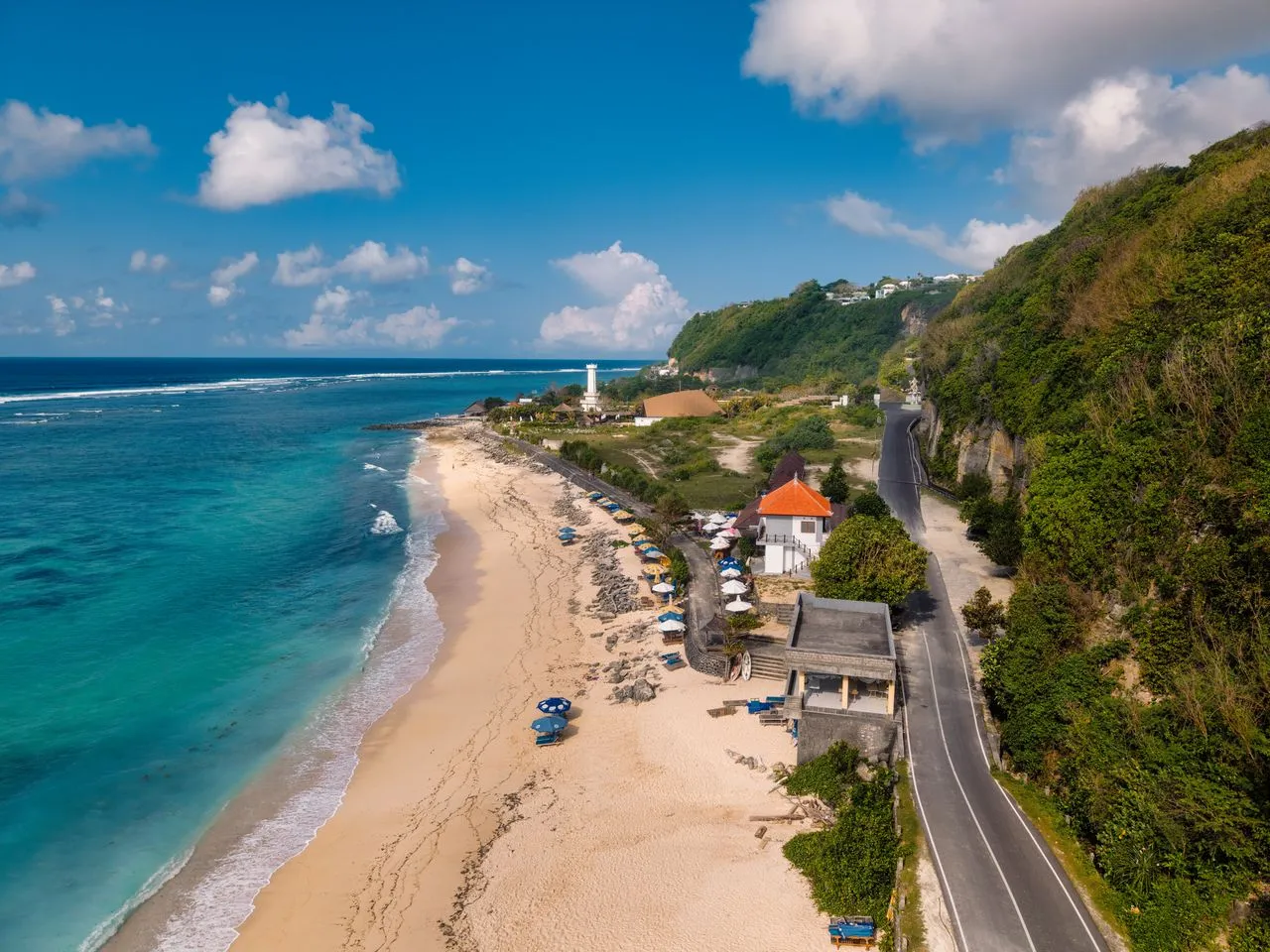

A first trip to Bali becomes much easier once you understand a few practical things before you arrive.
Entry requirements, mobile data, transport, money and local customs may not be the most exciting parts of planning a holiday, but they can make a big difference once you are actually there.
Bali can also work a little differently from what first-time visitors expect. A short distance on a map does not always mean a quick journey. Renting a scooter is not essential. And while cards are widely used, having some cash is still useful.
This guide covers those everyday details, from getting through the airport and traveling around the island to tap water, common scams, and temple etiquette.
The aim is not to plan your Bali trip for you, but to help you arrive knowing how the practical side of the trip works.
Sort Out These Essentials Before You Fly
You do not need to organize every part of your Bali trip before leaving home. But a few things are much easier to sort out before you arrive, especially entry requirements, mobile data and your journey from the airport.
Check the Entry Rules for Your Passport
Indonesia's visa rules are not the same for every traveler. What you need depends on your nationality and the type of visit, so do not assume that advice for someone with a different passport also applies to you.
Before traveling, check the latest requirements through the official Indonesian eVisa system. It shows the available visa and visa-exemption options and is the best place to start rather than relying on a third-party visa website.
Check again shortly before you fly as well. Entry procedures can change, and older guides may still mention forms or processes that are no longer used.
Complete the Current Arrival Requirements
There are a couple of arrival requirements to be aware of in addition to your visa.
Travelers entering Indonesia are currently required to submit the All Indonesia arrival card within three days before arrival. The official Indonesian Immigration website links to the current arrival-card system.
Bali also charges a separate foreign tourist levy of IDR 150,000 per person, although some visa and residency categories are exempt.
The Bali Provincial Government recommends paying through the official Love Bali system before departure, although payment is also available in Bali. Once you pay, keep the QR-code voucher somewhere easy to find on your phone.
Your visa, arrival card and Bali tourist levy are separate requirements, so completing one does not automatically cover the others.
Work Out How You Will Get Mobile Data
Having internet access from the beginning makes those first few hours in Bali much easier.
You may need it to open maps, contact your accommodation or driver, check a booking or arrange a ride.
The main options are:
-
an eSIM if your phone supports one and you want data ready when you land
-
a local SIM if you would rather buy a local mobile plan after arriving
-
international roaming if you prefer the convenience and are comfortable with your provider's charges
For a short holiday, paying a little more for convenience may be worth it. If you are staying longer, comparing local plans can make more sense.
The important part is simply having a plan before you find yourself outside the airport trying to arrange transport without internet access.
Know How You Are Leaving the Airport
You do not have to pre-book an airport transfer, but it helps to know what you are going to do once you collect your bags.
A pre-arranged transfer is convenient if you arrive late, have several bags or simply like the idea of having someone waiting for you.
Grab and Gojek are also options. Both currently operate airport car services at I Gusti Ngurah Rai International Airport, with designated pickup arrangements.
If that is your plan, install the app before travelling and make sure you will have mobile data when you land.
Book the Things That Actually Need Booking
You do not need to book every part of your Bali itinerary before you leave.
Start with the things where certainty genuinely helps: your first accommodation, an airport transfer if you want one, and any experience that matters enough to you that missing out would affect the trip.
Beyond that, some flexibility is useful. Traffic, Bali’s weather and even how energetic you feel once you arrive can change what you want to do.
You want to arrive prepared, not with every hour of the holiday already decided.
Getting Around Bali Takes More Time Than the Map Suggests
Transport is something first-time visitors often underestimate in Bali.
Two places may look close together on a map but take much longer to reach than the distance suggests, particularly when traffic is heavy.
The good news is that you have several ways to get around. You can use different ones during the same trip depending on where you are going and what you are doing.
Grab, Gojek, Taxis or a Private Driver?
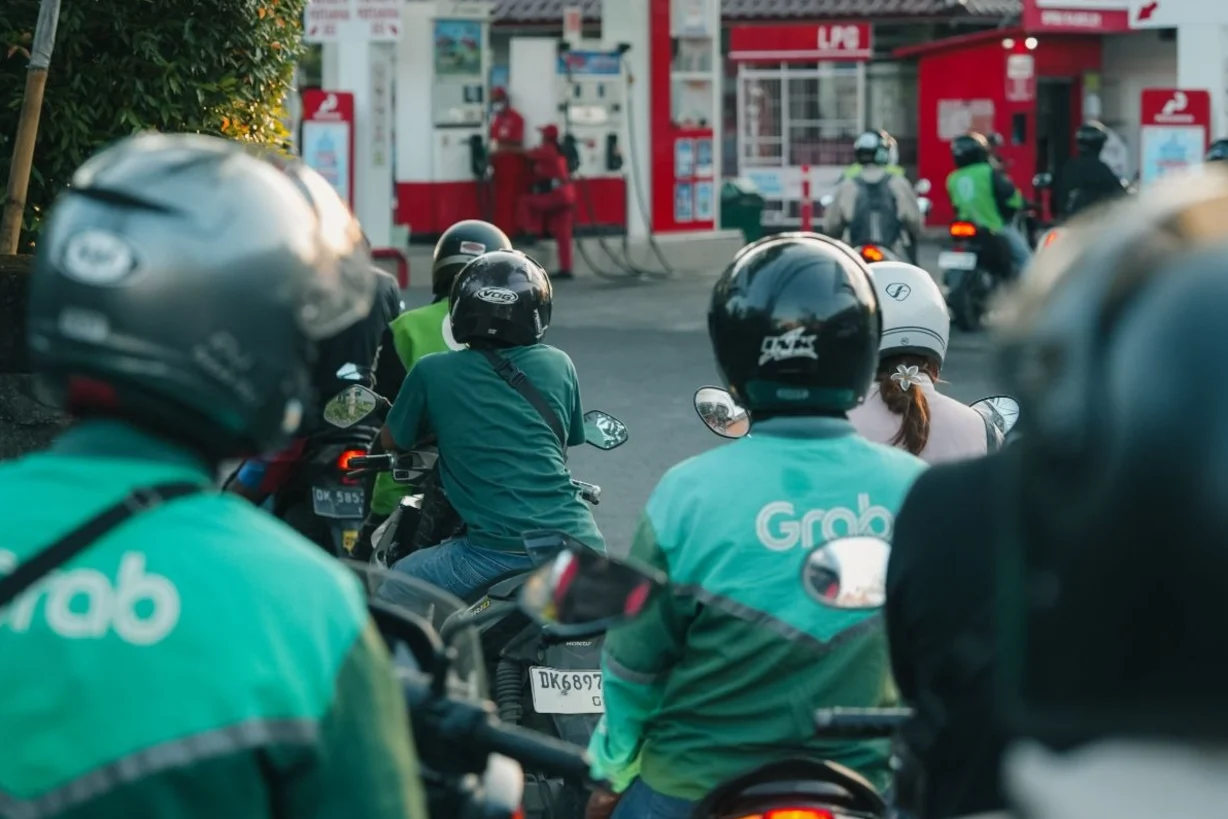
For shorter journeys, Grab and Gojek are convenient options. Enter your destination in the app and you can request a car or, where available, a motorbike ride.
Cars make more sense when you have luggage, are travelling with someone else or simply do not want to ride on the back of a motorbike.
Taxis are another straightforward option. Just make sure you understand how the fare will be calculated before setting off.
A private driver becomes particularly useful when you want to visit several places in one day. Instead of arranging a separate ride after every stop, you have someone available throughout the day and more flexibility if your plans change.
You may end up using all three during the same holiday, and that is completely fine.
Should You Rent a Scooter?
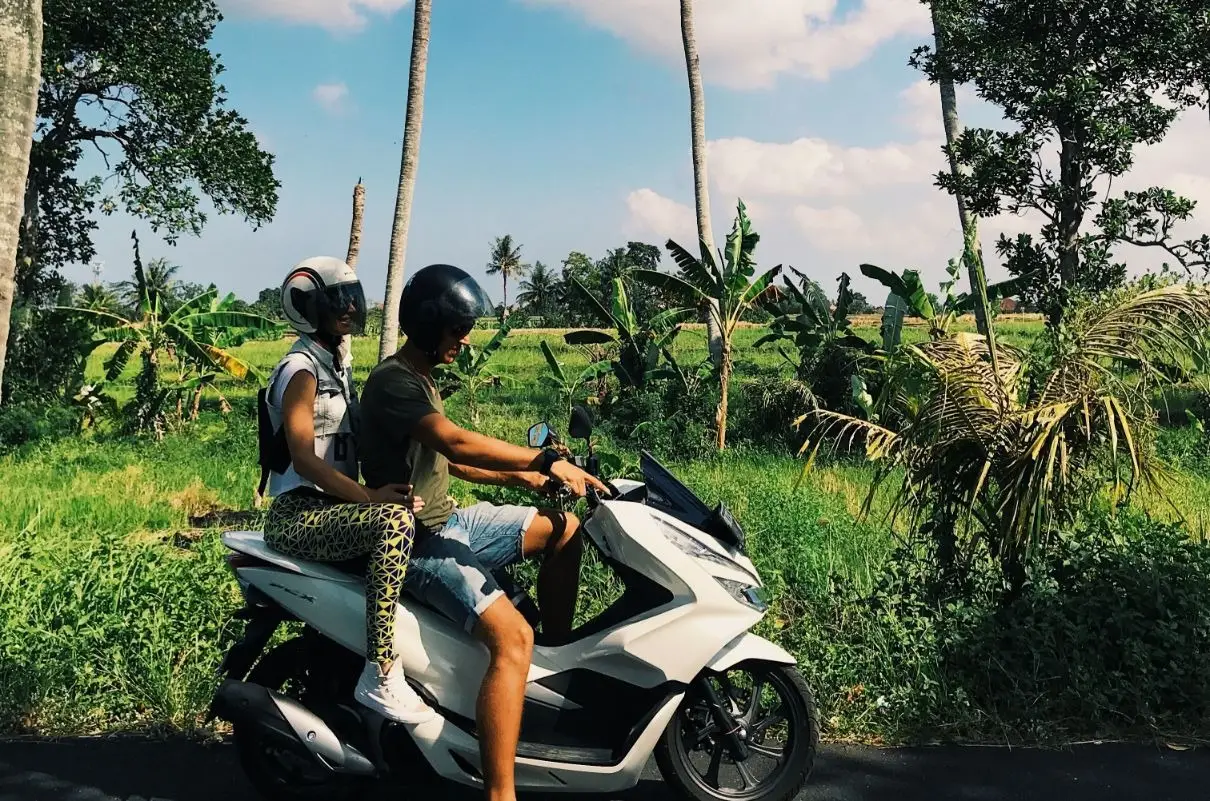
Scooters are everywhere in Bali, so it is easy to get the impression that renting one is simply part of the experience.
It isn't.
If you already ride confidently, a scooter can be convenient. Check that your licence is valid for the vehicle, make sure your travel insurance covers you and follow the local rules, including wearing a helmet.
But Bali is not a good place to learn to ride just because scooter rentals are easy to find.
If you have little or no riding experience, use a car, taxi, Grab, Gojek or a private driver instead. You will probably enjoy the trip more than trying to become comfortable with a scooter in unfamiliar traffic.
Leave More Time Than the Distance Suggests
Try not to build your sightseeing days around the shortest travel time shown on a map.
Traffic, the route and local road conditions can all add time.
This becomes especially important if you want to visit several parts of Bali in one day or have a reservation, tour or other activity that starts at a fixed time.
Give yourself some breathing room. Visiting one fewer place is often better than spending half the day rushing between them.
The same applies when changing hotels. Moving between two areas may not look like a major journey, but checking out, travelling and checking in can still use a noticeable part of the day.
Do Not Assume Every Bali Area Is Easy to Explore on Foot
Walking is useful for short trips around the area where you are staying, but distance alone does not tell you whether a route will be comfortable on foot.
Check the actual route first.
If it looks busy, awkward or less walkable than expected, taking a short taxi or app-based ride may be easier.
In Bali, choosing the simplest transport for each journey usually works better than trying to make one method work everywhere.
Cash or Card? How Money Works in Bali
Bali is neither completely cash-based nor a place where you can comfortably assume every payment will go on a card.
Having access to both is the easiest approach.
Cards are commonly accepted at larger hotels, restaurants and shops. Indonesian rupiah is still handy for smaller businesses, markets and everyday purchases.
Carry Some Rupiah, but Not Your Entire Budget
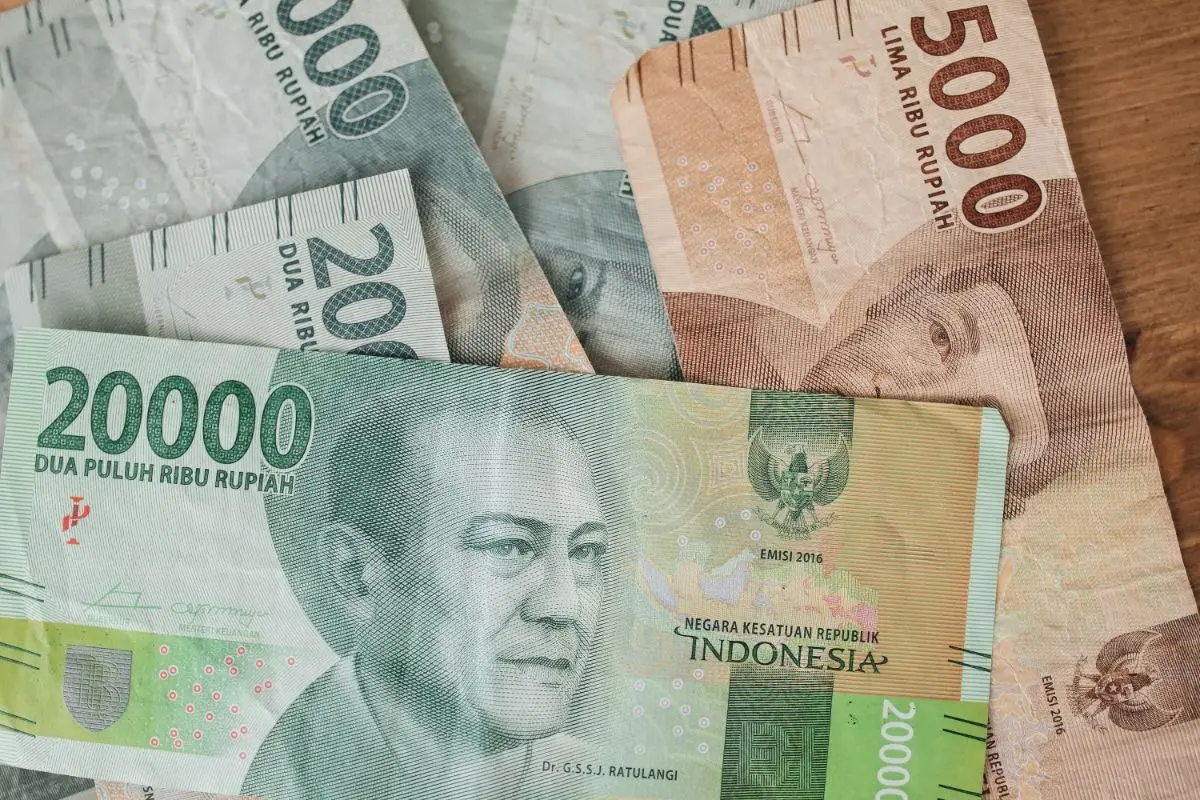
There is no reason to arrive carrying enough cash for the whole holiday.
ATMs are widely available in Bali, and international cards on major networks can generally be used at compatible machines.
Still, keep some rupiah with you for situations where card payment is not available or convenient.
Before travelling, check what your bank charges for international card payments and ATM withdrawals. Foreign transaction fees, withdrawal fees and exchange-rate markups vary between providers, so there is no single payment method that will be cheapest for everyone.
Use ATMs and Money Changers Carefully
If you need to exchange foreign currency, use an authorized money changer rather than automatically choosing the booth advertising the most attractive rate.
The Bali Provincial Government advises visitors to use authorized providers and publishes licensed money changers through Love Bali.
For cash withdrawals, machines at established banks or secure locations are the better choice. Protect your PIN and keep your card in sight during payments.
You do not have to approach every transaction with suspicion. Just be selective about where you withdraw or exchange money.
Get Used to Large Rupiah Numbers
Indonesia uses the Indonesian rupiah (IDR), which means prices may look surprisingly large during your first few days.
Take an extra second to check the zeros before handing over cash or confirming a payment.
Once you become familiar with the notes and typical prices, the numbers quickly stop looking quite so intimidating.
Tap Water, Food and Everyday Health Precautions
There is no reason to spend the holiday worrying about getting sick.
A few sensible habits around drinking water, food, mosquitoes, animals and the heat are usually enough to reduce many of the avoidable problems travelers run into.
Do Not Drink Untreated Tap Water
For drinking, stick to bottled, boiled or properly treated water rather than untreated tap water.
If you are unsure about the water at your accommodation, use the same safe water for brushing your teeth.
You do not need to panic if a little tap water touches you. Just do not treat untreated tap water as drinking water.
Enjoy Local Food, Just Use Normal Food-Safety Judgment
Trying Balinese and Indonesian food should be part of the trip, not something you avoid because you are worried about getting sick.
What matters more is how the food has been prepared and stored.
Freshly cooked food served hot is generally the safer choice. Take a little more care with raw or undercooked food, food that has been sitting out for a long time, or raw produce when you are unsure how it was washed.
That does not mean avoiding warungs, markets or unfamiliar dishes.
Look for places where food is being prepared fresh and the general hygiene appears reasonable, just as you would anywhere else.
If you become seriously unwell, particularly with persistent diarrhoea, fever or other concerning symptoms, get medical advice instead of assuming it is simply “Bali Belly.”
Heat, Mosquitoes and Hydration Matter Too
Mosquito protection is worth taking seriously because dengue occurs in Bali.
Use insect repellent as directed, especially when you are spending time outdoors. Covering exposed skin where practical and staying somewhere with screens or air conditioning can also help.
Then there is the heat.
Long sightseeing days can be tiring when you combine high temperatures, sun exposure and a lot of walking. Drink water regularly, use sunscreen and take a break when you need one.
It is also best not to touch or feed unfamiliar animals, including monkeys and dogs.
Rabies is present in Indonesia, so a bite or scratch should be taken seriously and treated promptly.
None of this should stop you enjoying the outdoors, local food or Bali's wildlife. They are simply useful habits to keep in the back of your mind.
Common Scams: What Is Actually Worth Watching For?
Most people you deal with in Bali will simply be going about their work, and there is no reason to spend the trip assuming everyone wants to scam you.
The situations worth paying attention to are usually quite ordinary: unofficial websites, unclear prices, suspiciously good exchange rates and offers that pressure you to make a quick decision.
Use Official Websites for Visas and Tourist Payments
Visas are one area where third-party websites can easily create extra costs or confusion.
Use Indonesia's official eVisa system rather than a website that simply looks official.
The same goes for Bali's tourist levy. Use the official Love Bali system or reach it through Bali Provincial Government information.
Be cautious if a website adds unexpected service charges or makes the process sound unusually urgent.
When government paperwork is involved, going directly to the official source is usually the easiest way to avoid problems.
Be Careful With Exchange Rates That Look Too Good
If one money changer is offering a noticeably better rate than everywhere nearby, treat that as a reason to be cautious rather than a bargain to rush towards.
Use an authorized provider and take your time with the transaction.
Know the Price Before You Agree
Not every case of overcharging involves an elaborate scam.
Sometimes the problem is simply that nobody made the price clear at the beginning.
For transport, check the price shown in a reputable ride-hailing app, make sure the taxi meter is being used as expected, or agree on a fare beforehand when there is no fixed price.
Do the same with tours, tickets and other services.
You do not need to negotiate every small purchase. Just avoid situations where you have no idea what something will cost until it is already over.
Check a Scooter Before You Take It Away
If you rent a scooter, photograph or video it before leaving.
Make sure visible scratches or existing damage are already noted and understand what the rental agreement says you are responsible for.
It takes less than a minute and makes things much clearer if there is ever a disagreement when you return it.
The general rule for scams in Bali is fairly simple: use established providers, know what you are agreeing to and slow down when someone is pushing you to make a quick decision.
Respect Bali's Temples, Ceremonies and Everyday Customs
Temples, offerings and ceremonies are part of everyday life in Bali. They are not simply attractions placed there for visitors.
You do not need to study Balinese customs before your holiday, but being aware of what is happening around you makes it much easier to behave respectfully.
Dress and Behave Respectfully at Temples
Dress modestly when visiting temples and sacred sites and follow the instructions at the entrance.
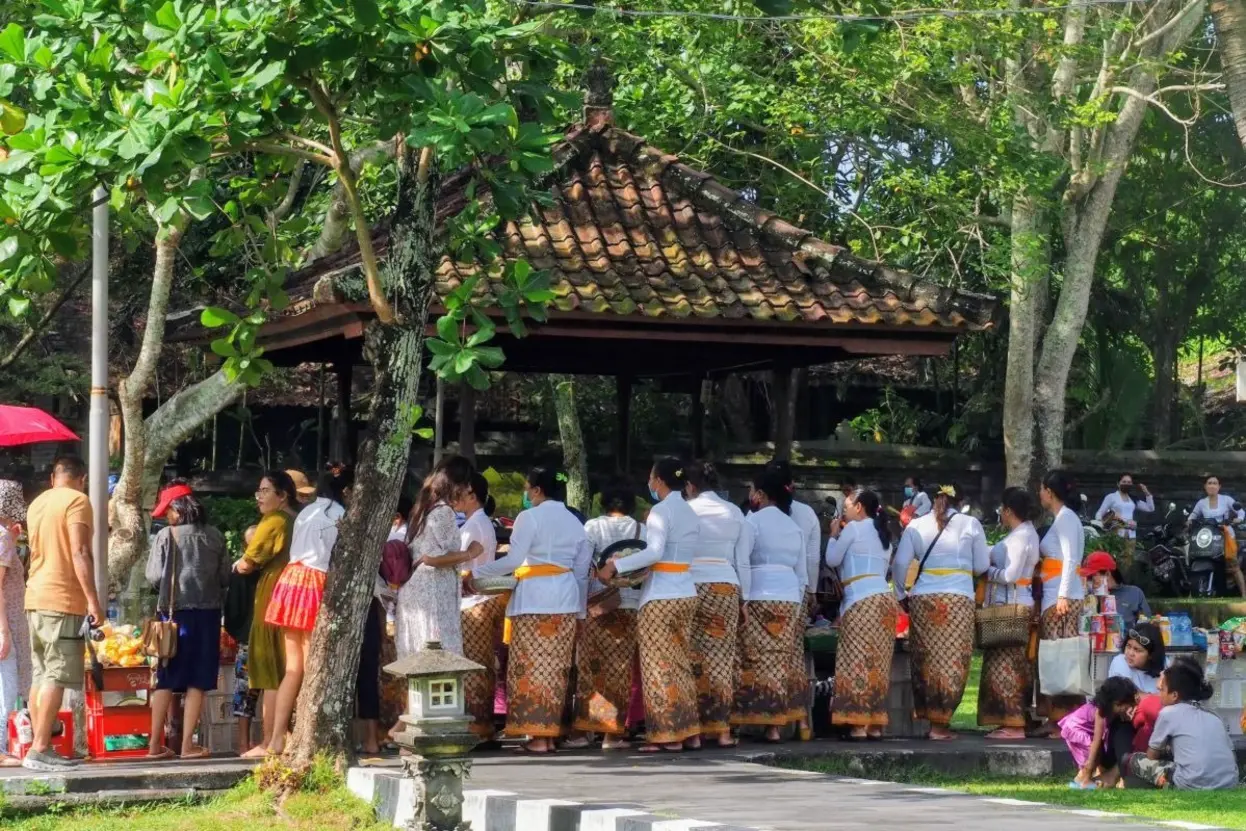
Some temples require visitors to wear a sarong or another covering. Some areas may also be closed to visitors.
Rules can vary from one temple to another, so follow the guidance at the place you are visiting rather than assuming that what was allowed somewhere else will also be allowed here.
The same applies to photos.
Take them respectfully and avoid poses or behaviour that would be inappropriate in a place of worship.
Be Mindful of Offerings and Ceremonies
You will regularly see small religious offerings outside homes, shops, businesses and temples. Some are placed on pavements or close to entrances.
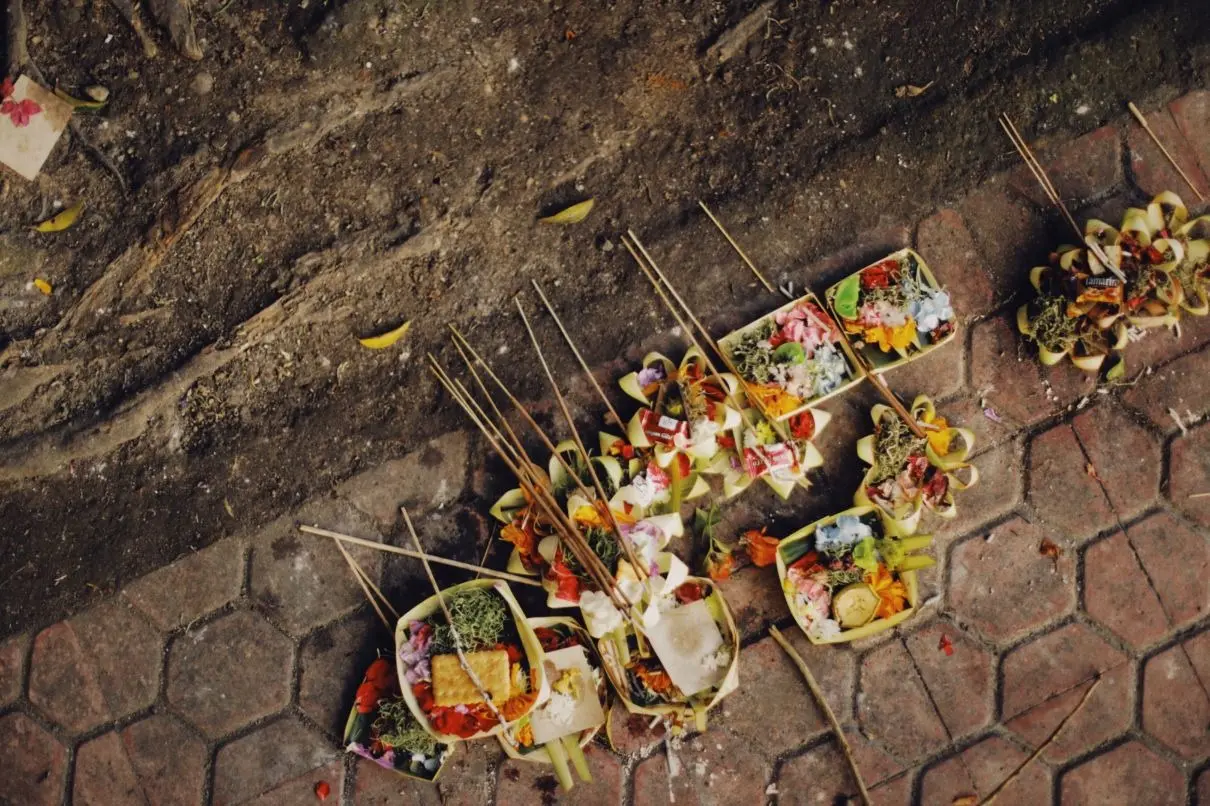
If you notice one in your path, simply walk around it where you can rather than stepping on, moving or disturbing it.
Ceremonies and processions are also part of normal life and can occasionally affect roads or access to a particular place.
If that happens, allow a little extra time and follow local directions.
And if you stop to watch a ceremony, remember that the people taking part are practising their religion. It is not a performance being staged for tourists.
Check Whether Nyepi Falls During Your Trip
One Balinese observance is important enough to affect almost every traveler on the island.
Nyepi, the Balinese Day of Silence, affects Bali for 24 hours.
From 6 a.m. on Nyepi until 6 a.m. the following morning, most normal activity stops. Visitors are expected to remain at their accommodation, roads close to regular traffic, businesses shut and Bali's airport does not operate normal incoming or outgoing flights.
Hotels continue looking after guests, although what is available varies between properties.
If your dates fall around Nyepi, speak to your accommodation in advance and avoid planning sightseeing, airport transfers or flights for the day itself.
Nyepi is not simply a restriction imposed on visitors. It is an important Balinese Hindu observance centred on silence and reflection.
Follow Local Guidance at Sacred and Public Places
Bali has official visitor guidance covering respectful behaviour at sacred places as well as things such as driving, licensed services and environmental conduct.
You do not need to memorize every rule before you arrive.
Follow signs and local instructions. Dress appropriately where required. Do not interfere with ceremonies or sacred objects. And remember that the places you are visiting are also homes, communities and places of worship.
You can enjoy Bali as a visitor without treating everything around you as something created for tourism.
What First-Timers Really Need to Get Right
A good first trip to Bali does not depend on planning everything perfectly.
Get the basics sorted before you go: check the current entry requirements, know how you will get online and leave the airport, and have access to both cash and a working card.
Once you are there, give yourself realistic travel times, choose transport you are actually comfortable using and pay attention to local customs.
Most importantly, do not feel that you have to travel Bali in a particular way just because that is what you see online. Use the transport you are comfortable with, leave some flexibility in your plans and take sensible precautions without worrying about every meal or interaction.
Get those basics right and the practical side of Bali becomes much easier to manage, leaving you more time to enjoy the trip itself.
If you would prefer to have accommodation, transport and parts of your itinerary arranged together, you can also explore Advensa's Bali travel plans and choose an option that suits your trip length and travel style.