Navigation
Budget vs. Midrange vs. Luxury Halong Bay Cruises: What You Actually Get
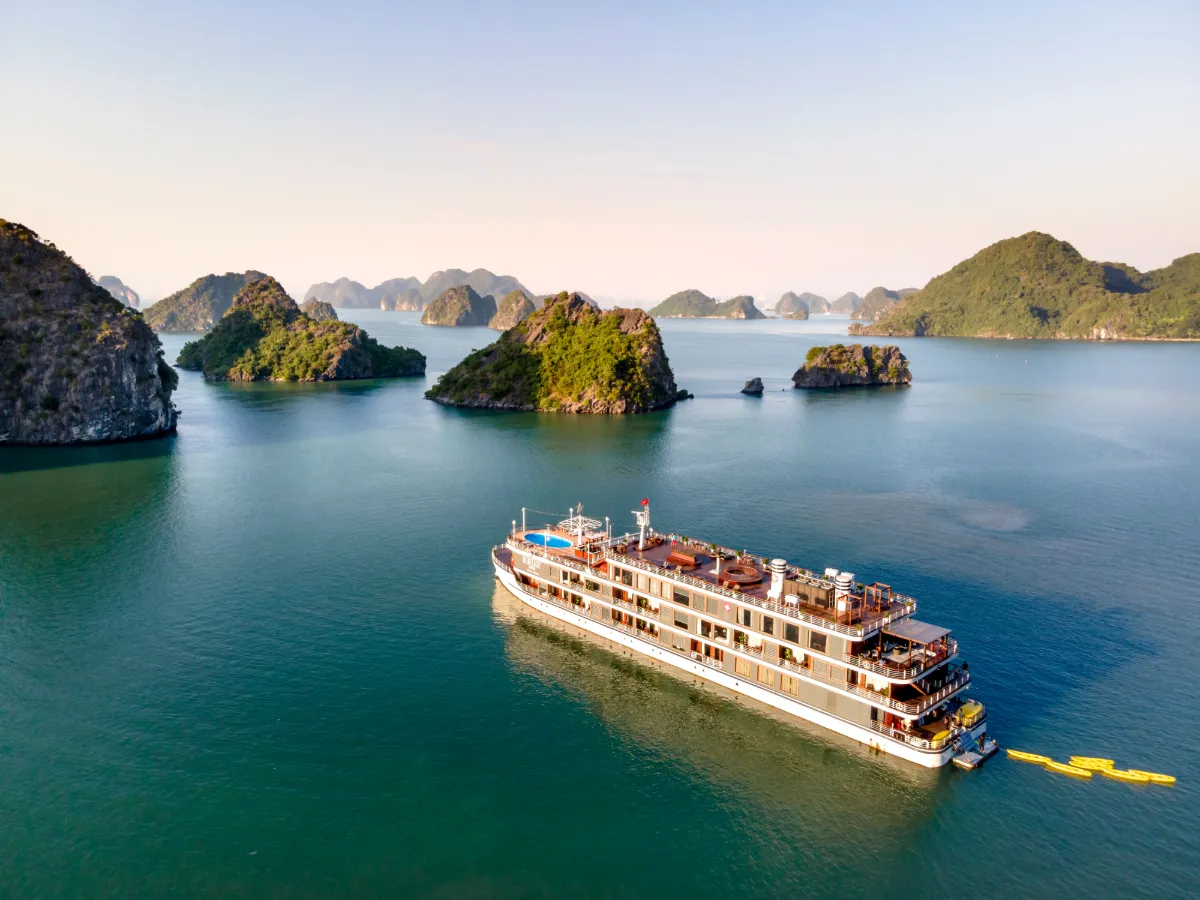

Paying more for a Halong Bay cruise usually gets you a better cabin, more personal space, better dining and service, and more facilities. What it does not necessarily get you is better scenery, quieter sightseeing stops or a smaller boat.
That is why labels such as “budget”, “midrange” and “luxury” are only a starting point. There is no universal standard in Vietnam that places every cruise neatly into one of these categories.
Budget Ha Long Bay cruises (about $40-$130 per person per night) give you the scenery and basic comfort. Midrange cruises (about $125-$160+) add bigger cabins, balconies and quieter routes. Luxury cruises (about $200-$400+) add suites, pools or jacuzzis, fine dining and personal service.
|
Budget |
Midrange |
Luxury |
|
|
Price per person, per night |
$40–$130 |
$125–$160+ |
$200–$400+ |
|
Cabin |
Smaller, simple, basic private bathroom |
Larger, modern, better finish |
Spacious suite with floor-to-ceiling windows |
|
Private balcony |
Limited or not available |
Often available |
Common, often with a terrace or bay-view bathtub |
|
Food |
Set menu: Vietnamese and international |
More polished dining room |
Fine dining, sometimes with a wine cellar |
|
Service |
Friendly and basic |
More refined |
Highly attentive, sometimes with a personal butler |
|
Onboard facilities |
Sundeck only |
Sundeck, spa services |
Pool, jacuzzi, fitness centre, large lounges |
|
What you mainly pay for |
Access to the cruise experience |
Everyday comfort and good value |
Space, privacy, service and the ship itself |
|
Best for |
Backpackers and tight budgets |
Couples and families |
Honeymoons and special occasions |
These are broad patterns, not fixed standards. The boat, cabin and itinerary matter more than the category alone.
What Do You Gain by Moving from Budget to Midrange?
Moving from a basic cruise to a good midrange option usually improves the parts of the trip you use every day: your cabin, meals and general comfort.
Cabins are a good place to start. A cheaper cruise may give you a simple room with a window and private bathroom. A higher-priced option may offer more space, better bedding, a nicer bathroom or a private balcony.
Look at the cabin size rather than names such as “Deluxe” or “Premium.” These terms are not consistent between cruise companies. Even within the same company, room sizes and features can vary. Bhaya Classic Cruise, for example, currently lists an average 13 m² Deluxe Cabin and a 17 m² Terrace Suite with a private terrace.
A balcony can also be a worthwhile upgrade if you want a private place to enjoy the bay without going to the shared deck. But make sure you know what you are booking. Some cabins have a traditional outdoor balcony, while others use different layouts. Red Dragon, for example, distinguishes between sheltered indoor loggias and open-air private balconies.
Food and service may improve too. A midrange option may offer better meal presentation, more menu choices and smoother service. Shared areas may also feel more comfortable and better finished.
That does not mean a budget cruise is a poor choice. If you mainly want to see the scenery, join the excursions and spend little time in your cabin, paying extra for more space or nicer finishes may not add much to your trip.
The important question is whether the cheaper option makes compromises you will actually notice.
What Do You Gain by Moving from Midrange to Luxury?
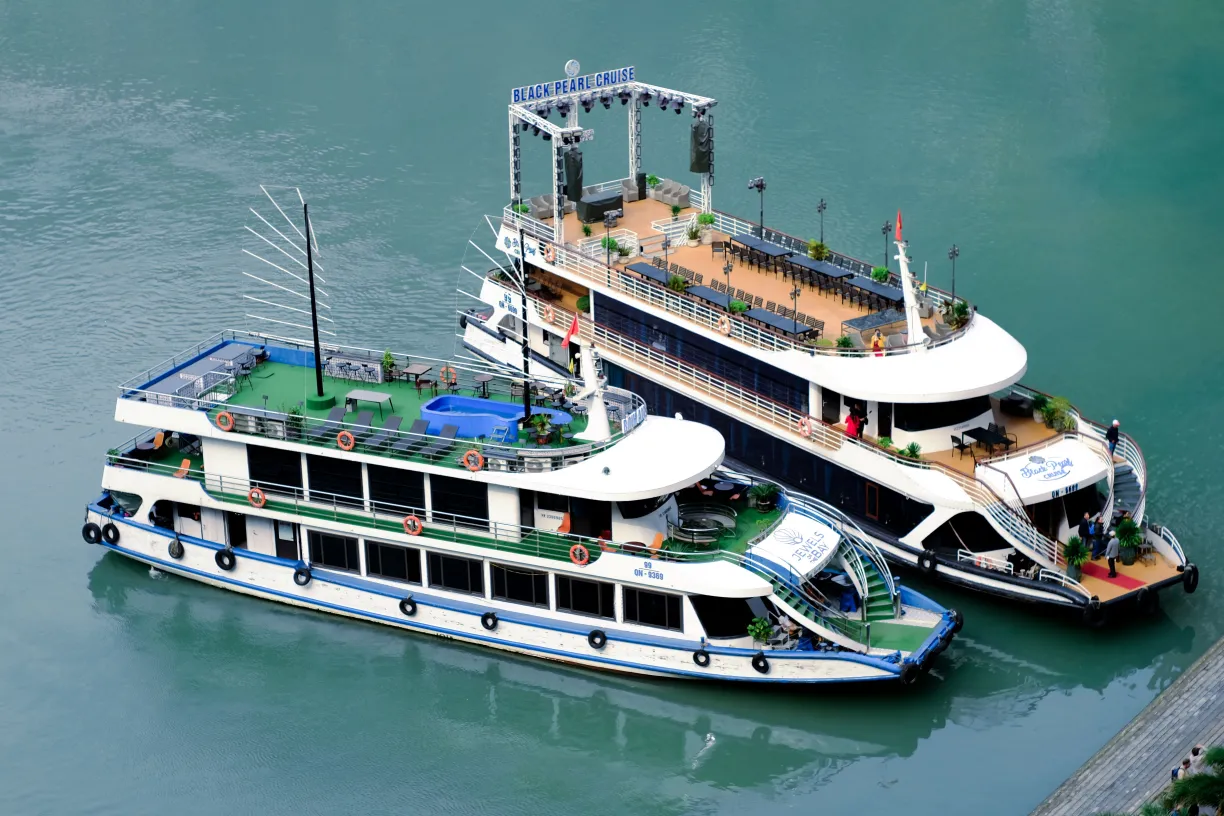
Once you are comparing a good midrange cruise with a luxury one, the difference starts to change.
You are often paying less for basic comfort and more for making the ship itself part of the experience.
That can include:
- a significantly larger cabin or suite
- more private outdoor space
- a larger bathroom or bathtub
- more polished interiors
- higher-end dining
- more personalised service
- larger lounges and sundecks
- spa or wellness facilities
- a pool or Jacuzzi
For example, Ambassador Signature currently lists cabins starting at 28 m², all with balconies, as well as a spa, piano lounge and sundeck. Ambassador Cruise I offers private balconies or terraces across its cabins, along with two sundecks, bars, a Jacuzzi pool and spa.
These are meaningful upgrades. But they do not change the main reason Ha Long Bay is worth visiting for most people.
You are still travelling through the same wider limestone landscape. Kayaking, sightseeing and other common activities are available across different price levels. A bigger bathroom or better restaurant does not make the view from the deck more impressive.
Luxury makes more sense when the ship matters almost as much as the destination.
A honeymoon couple who wants slow mornings, time on a private balcony, and a more polished atmosphere may get much more value from the upgrade than someone who plans to join every excursion and mainly uses the cabin for sleeping.
What Paying More Does Not Automatically Get You?
One common mistake is assuming that every part of the cruise improves as the price goes up.
It does not.
A luxury cruise is not necessarily a small cruise. Ambassador Cruise I, for example, is positioned as a luxury vessel but has 46 cabins and a capacity for 120 passengers. Red Dragon, by comparison, has only eight cabins.
If a smaller, more intimate atmosphere matters to you, look at the number of cabins and passenger capacity rather than relying on the word "luxury".
Crowding also needs a closer look because there are two different types:
- Onboard crowding is how busy your own restaurant, deck and shared spaces feel.
- Sightseeing crowding is how many other boats and travellers arrive at the same caves, beaches or activity areas around the same time.
A higher-end boat may feel more spacious without changing how busy the sightseeing stops are.
Route is another factor. If avoiding busy locations matters to you, compare where the boat goes rather than using price as a shortcut. Some itineraries head to Lan Ha Bay, close to Cat Ba Island, instead of staying in the busier inner bay.
The same goes for the age of the vessel. A newer boat may have more modern interiors, but age alone does not tell you how well it is maintained. Its current condition, upkeep and any recent refurbishment matter too.
A useful rule to remember is:
- Cruise tier, boat characteristics and itinerary are three different things.
Keeping them separate makes it easier to understand what you are really paying for.
Check What Is Actually Included Before Comparing Prices
Two cruise prices can look very different at first, but the gap may become much smaller once you see what each fare includes.
Before deciding that one option is cheaper, make sure both prices cover the same:
- Duration (day cruises, a 1-night cruise or a 2-night cruise)
- number of guests and occupancy
- cabin category
- meals
- Hanoi transfers
- kayaking and other excursions
- sightseeing or entrance fees
- taxes and service charges
- drinks
- holiday or seasonal surcharges
- cancellation and rebooking conditions
Transfers are a good example.
Do not assume they are included just because the cruise is expensive. Orchid Cruises currently includes kayaking, meals, sightseeing fees and several onboard activities on one of its luxury itineraries, while the Hanoi–Halong transfer is excluded and available separately.
Bhaya also states on current itineraries that transfers may be excluded unless specifically confirmed.
So the lower headline price is not always the lower final price.
Cancellation terms are worth checking too. Policies can vary by rate or promotion, while bad weather or instructions from local authorities can affect itineraries and activities. A higher fare does not protect you from these disruptions, so read the booking conditions as well as comparing the cabin and inclusions.
Bhaya also notes that activities such as kayaking and swimming may be cancelled in rough conditions.
For seasonal context, Advensa's best time to visit Vietnam guide explains the conditions around Halong Bay in more detail.
Look at the complete booking, not just the price shown beside the cabin.
Which Tier Is Worth Paying For Based on Your Priorities?
There is no single tier that offers the best value for every traveller, including first time visitors.
A Budget Cruise Can Make Sense If…
Your main priority is seeing Halong Bay rather than spending a lot of time enjoying the ship itself.
A simpler option may be enough if you are comfortable with a smaller cabin, do not need a private balcony and would rather save more of your budget for the rest of your Vietnam trip.
Just avoid choosing the cheapest option based on price alone. Consider the vessel condition, cabin, inclusions and itinerary before booking.
Midrange May Suit You If…
You want a comfortable cruise without paying heavily for premium facilities.
A good midrange option can make sense if you value a better cabin, good dining and perhaps a balcony, but do not care much about a spa, large suite or highly personalised service.
It may suit you especially well if you expect to spend much of the trip sightseeing rather than relaxing on the ship.
Luxury May Be Worth It If…
The cruise itself is an important part of your holiday.
Larger rooms, private outdoor space, better dining, polished service and more leisure facilities can make a real difference when you plan to spend time enjoying them.
This may be especially worthwhile for a honeymoon, anniversary or slower trip where relaxing on the boat matters as much as the excursions.
If your main priorities are fewer crowds or a quieter route, focus instead on passenger capacity and itinerary.
Pay More for the Parts You Will Actually Value
Moving from a basic cruise to a more comfortable one usually improves the fundamentals: your cabin, meals and general comfort. Moving further into luxury puts more of the price toward space, privacy, service and facilities.
Whether that premium is worth paying depends on how much you will use those upgrades.
Compare the cabin, passenger capacity, itinerary and inclusions rather than relying on the budget, midrange or luxury label.
Frequently Asked Questions
What is the most luxurious cruise on Halong Bay?
Top-tier luxury vessels like Hermes Premium Cruise, Stellar of the Seas, and Capella Cruise lead the bay. They feature private balcony suites, fine dining, infinity pools, mini-golf, and private butler services, transforming the journey into a floating luxury resort experience.
What are the best cruise options available in Halong Bay?
The best option depends on your goal:
- First-time visitors: Athena Royal Cruises or Peony Cruise (balanced mid-range).
- Less Crowds: Signature Royal in Bai Tu Long Bay, one of the popular royal cruises, or La Regina in Lan Ha Bay, near Cat Ba Island.
- Luxury & Amenities: Hermes Premium or Ambassador Cruise.
Is a cruise on Halong Bay worth it?
Yes, Ha Long Bay is well worth visiting, especially on an overnight cruise. It offers an unforgettable way to wake up surrounded by emerald waters and limestone karsts, paired with sunset views, kayaking, and cave tours. Day cruises can feel rushed due to the 2.5–3-hour drive from Hanoi.
How much does a 1-night Halong Bay cruise typically cost?
Prices for 1-night cruises (2 days/1 night) average per person:
- Budget: $60 – $100
- Mid-range: $100 – $180
- Luxury: $180 – $400+
Fares usually include meals, cabin accommodation, and excursions; transfers from Hanoi often cost extra.