Navigation
10 Mysteries and Wonders of Mount Kailash and Lake Manasarovar
Hidden deep in the remote mountains of Tibet, Mount Kailash and Lake Manasarovar are unlike any other place on Earth. For thousands of years, they have attracted pilgrims, travelers, and explorers from around the world. The region is sacred to four major religions and is surrounded by stories that are hard to explain.
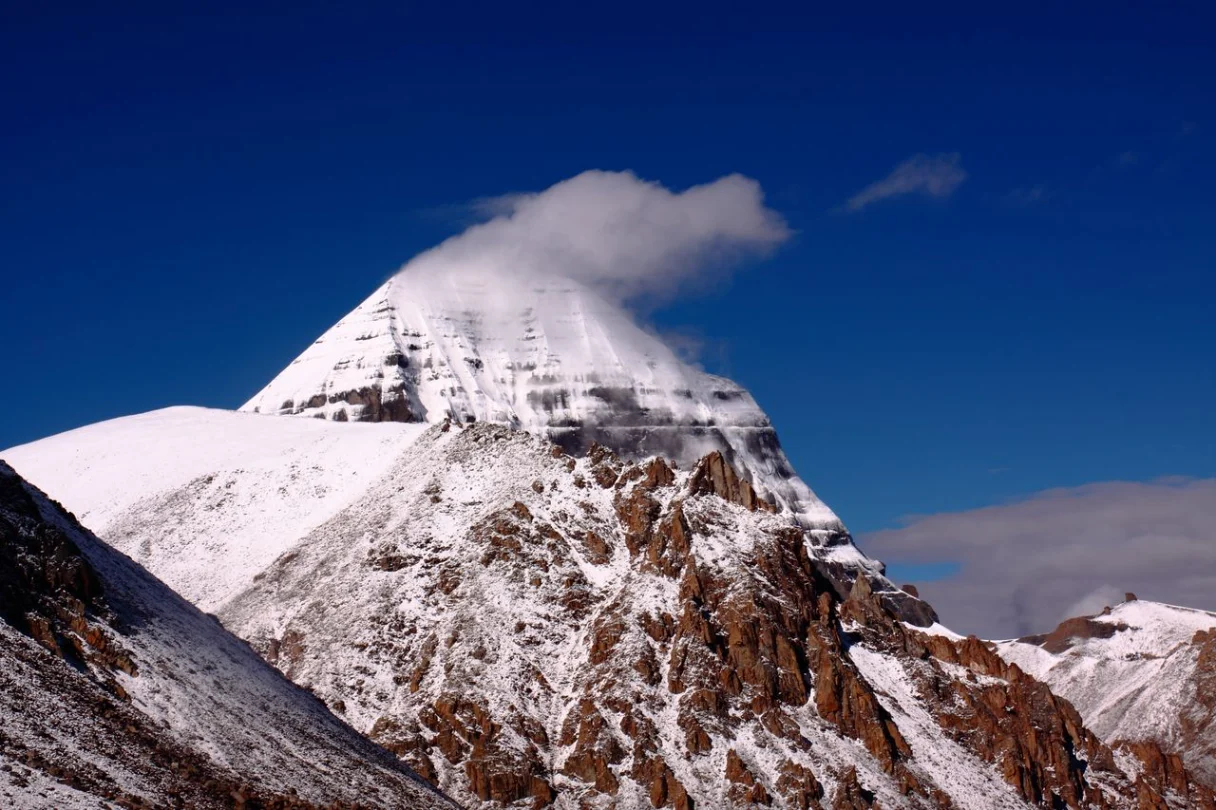
People talk about strange time-related experiences, unusual magnetic effects, and the mountain's almost perfectly pyramid-shaped appearance. Even more surprising, Mount Kailash has never been successfully climbed.
Whether you're interested in history, adventure, or spirituality, this remarkable place is full of mysteries that continue to fascinate people. Here are 10 of the most interesting mysteries and wonders of Mount Kailash and Lake Manasarovar.
1. The Mountain Nobody Can Climb
Did you know there's a mountain that no one has ever climbed? Mount Kailash, standing about 6,638 meters tall, remains unclimbed to this day. It’s not the tallest mountain, but it is so sacred that people believe climbing it would anger the gods.
In fact, in 2001 the Chinese government banned anyone from trying to reach the top out of respect for religious feelings. Even the world’s best climbers, like Reinhold Messner, refused to climb it, saying some places should stay untouched.
According to legend, only one person ever reached the summit—a Buddhist saint named Milarepa, who magically flew to the peak in a story from long ago. So Mount Kailash’s peak remains a mystery, quietly watching over the land without a single footprint on its snow.
2. A Holy Mountain for Many Religions
How can one mountain be holy for four different religions at once? Mount Kailash is like a spiritual meeting point. Hindus believe it is the home of Lord Shiva, a powerful god who meditates atop the mountain.
Buddhists see Kailash as the earthly version of Mount Meru, the center of the universe in their mythology.
Jains say their first spiritual teacher found enlightenment there, and followers of the ancient Bon religion also worship this peak.
Because of these beliefs, pilgrims from India, Nepal, Tibet, and all over the world travel to Kailash to walk around it and pray. They treat the mountain as a temple so sacred that even walking one circle around it is said to bless one’s life. Mount Kailash truly connects people of many faiths—a global sacred link in the Himalayas.
3. The Pyramid-Shaped Peak of Kailash
What if a mountain looked just like a giant pyramid? Mount Kailash has four smooth sides that face north, south, east, and west, almost like a man-made pyramid. This shape is very unusual; most mountains are rough and uneven, but Kailash’s sides are oddly symmetrical. From a distance it appears as if someone carved a perfect pyramid out of rock and ice. In fact, some adventurers have speculated wild ideas, wondering if an ancient civilization or even aliens shaped it long ago.
Of course, scientists say Kailash’s form is a natural result of geology and time, not a human-built pyramid. Yet the nearly perfect geometry of the mountain fuels our imagination. Kailash’s pyramid-like peak stands proud and mysterious, making people ask, “Did nature make this, or is there more to the story?”
4. The Mysterious Magic of Time at Kailash
Can time move differently on a mystical mountain? Many pilgrims have reported a strange feeling that time passes faster near Mount Kailash. They tell curious stories: hair and nails that normally grow in two weeks seem to grow that much in just 12 hours spent by the mountain! Some say, “One day at Kailash felt like two weeks to my body.”
Imagine waking up and finding your hair longer overnight—almost like a little time-travel magic. What could cause this? Scientists are not sure if time really changes, but they have a guess. They think Mount Kailash might have a strong magnetic field or special energy in the rocks that could affect people’s bodies and minds.
Magnetism can influence clocks and even our cells a bit, so it’s one possible explanation. Others believe the mountain’s spiritual power makes them feel time differently. We don’t have proof yet, so this time-warping experience remains an enchanting mystery of Kailash.
5. Compasses Gone Crazy: The Magnetic Mystery
What if your compass suddenly spun in circles and couldn’t tell north from south? Travelers near Mount Kailash have often noticed their compasses (which normally point north) stop behaving properly. Instead of pointing steadily, the compass needle wiggles and spins wildly, as if confused.
This is another puzzle of the mountain. One idea is that there are unusual minerals or magnetic rocks in Mount Kailash that mess with the compass. Just like a magnet can pull a compass needle, the mountain might have a natural magnetic force that makes the needle dance.
Another idea is that Kailash sits on an energy vortex, an invisible swirl of energy that affects both devices and people. Hikers have described feeling dizzy or lightheaded around here, which they link to this mysterious force.
While scientists lean towards a geological explanation (like metal in the ground), many visitors prefer to think the mountain is guarded by a special energy field. Either way, if you bring a compass to Kailash, don’t be surprised if it goes crazy—it's all part of the mountain’s mystique.
6. The Twin Lakes: One Sweet, One Salty
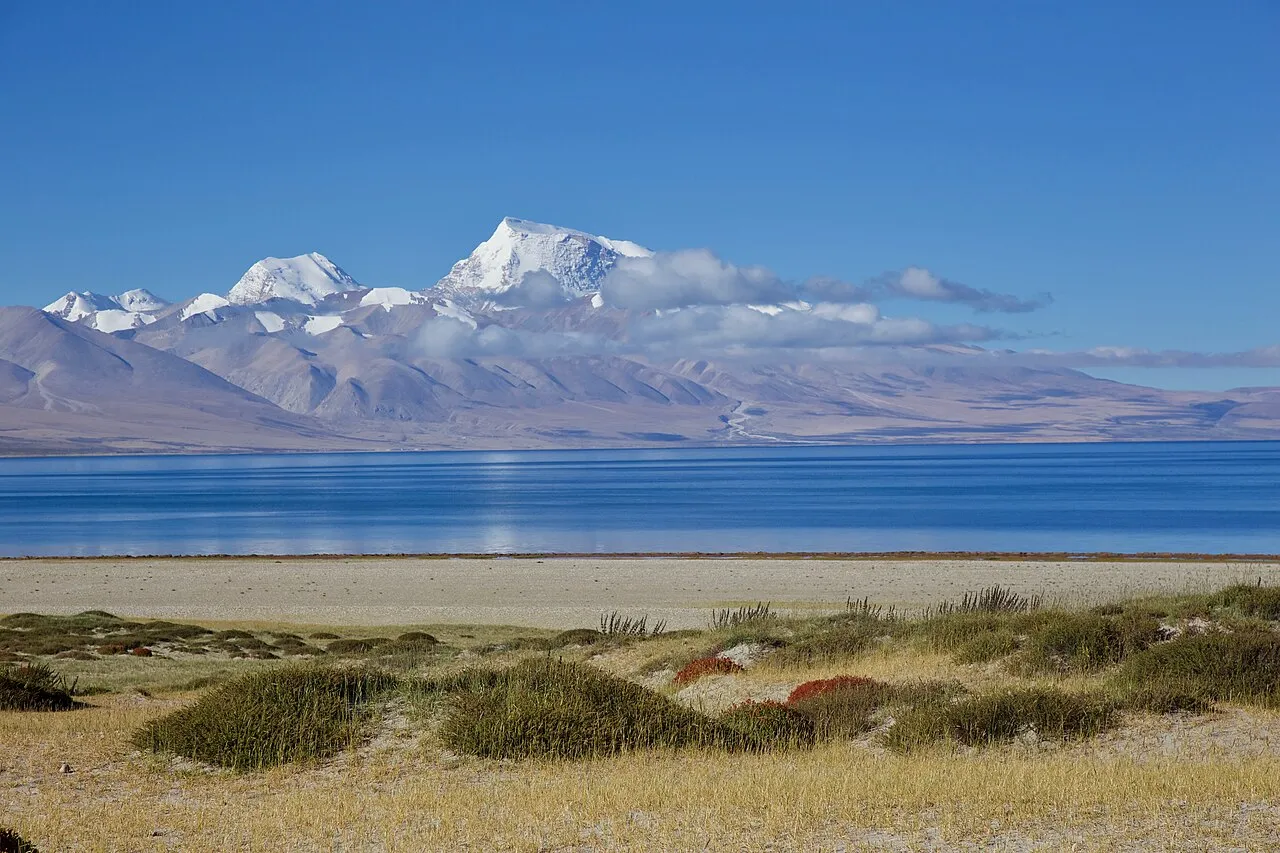
Why are two lakes side by side, one “sweet” and one “salty”? Near Mount Kailash sit two lakes that are complete opposites of each other. Lake Manasarovar is filled with fresh sweet water (drinkable like from a clean river), while right next to it, Lake Rakshastal is full of salty water you cannot drink.
Manasarovar is almost perfectly round and usually very calm—locals say its surface stays still even on windy days. In contrast, neighboring Rakshastal is shaped like a crescent moon and often has rough, turbulent waves.
No fish or plants live in the salty lake, making it eerily still and lifeless, whereas the freshwater Manasarovar has fish and even attracts birds like swans and geese.
Tibetan stories call Manasarovar the “holy lake” of light and Rakshastal the “demon lake” of darkness. Yet, surprisingly, a tiny channel connects the two lakes (though it stays dry most of the time).
It’s as if nature put two opposite twins side by side to balance each other. This sweet-and-salty pair of lakes adds a special kind of wonder to the Kailash landscape, making everyone ask how such different waters can exist so close together.
7. Lake Manasarovar: A Bath of Blessings
Would you take a bath in an icy lake if it could wash away your worries? Lake Manasarovar is not only beautiful; it’s considered one of the holiest lakes in the world. The name “Manasarovar” comes from Sanskrit words meaning “Lake of the Mind.” According to ancient legend, the creator god Brahma first imagined this lake in his mind before it appeared on Earth.
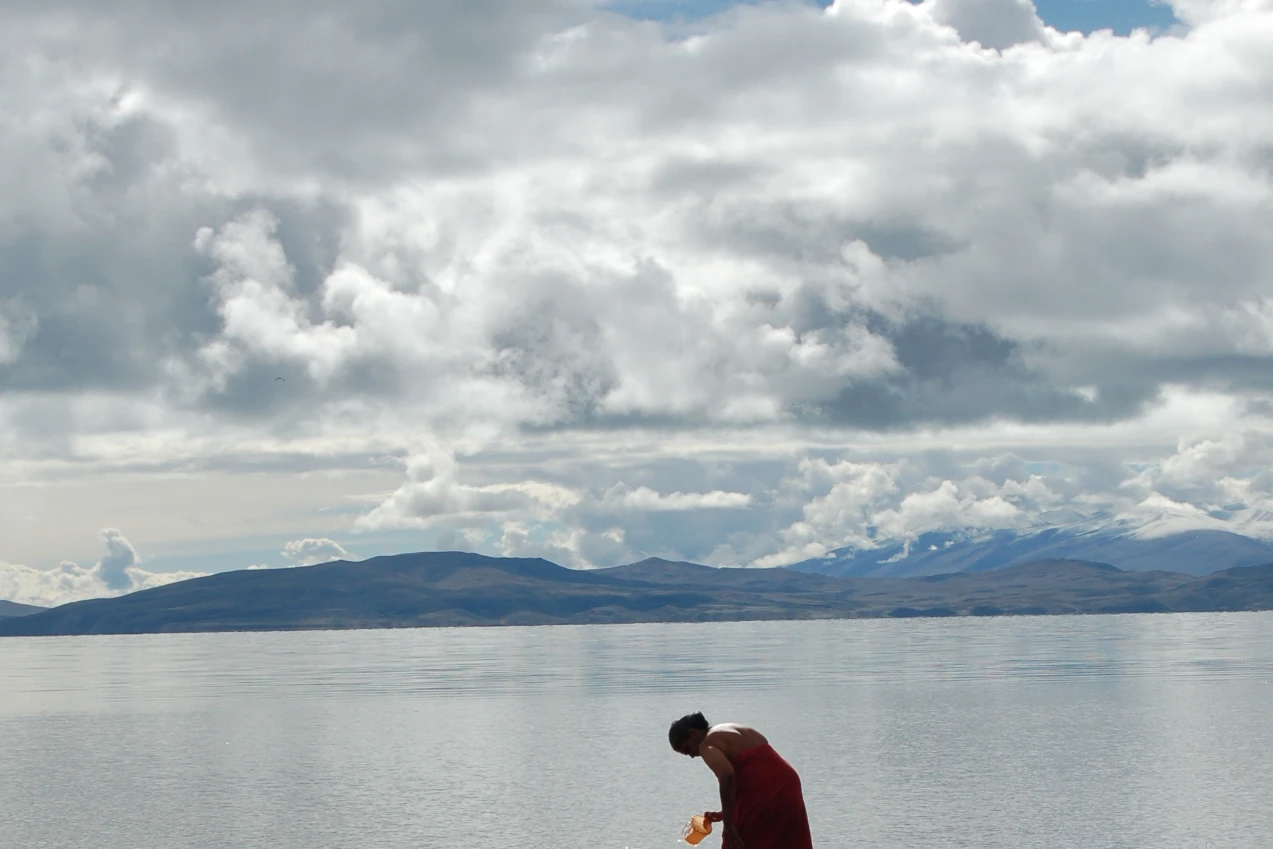
Hindus and Buddhists believe that its waters are blessed; taking a dip in the cold, clear lake is said to cleanse one’s sins and purify the soul. Every year, pilgrims travel long distances to reach Manasarovar’s shores and bathe or fill bottles with its water to carry home as sacred blessings.
The lake sits at a very high altitude (about 4,600 meters above sea level), which makes the air chilly and the water freezing cold. Yet, devotees bravely wade in, believing the spiritual benefits will warm their hearts.
Of course, scientifically, the water is just fresh glacial meltwater; there’s nothing proven to cure sins except the goodness of one’s own heart. But the faith and happiness it gives people are real. On a sunny day, you can see pilgrims laughing and praying in Manasarovar, shining with hope as they emerge from this lake of blessings.
8. A Fountain of Four Great Rivers
Did you know one mountain can give birth to four big rivers? Mount Kailash is like a giant water fountain for Asia, with streams from its region flowing out to form four of the continent’s mighty rivers.
To the south, a river from near Kailash becomes the Karnali, which joins the sacred Ganges in India. To the west flows the Sutlej, to the north the Indus, and to the east the Brahmaputra—all starting their journeys around the Kailash area.
These rivers travel very far, passing through India, Nepal, Pakistan, Tibet, and beyond, bringing water to millions of people and animals. Long ago, people noticed this amazing fact that four major rivers begin near Mount Kailash and go in different directions like the four cardinal points on a compass.
This is one reason they imagined Kailash as the center of the world. Geographically, it’s a remarkable thing—the mountain’s snow melts and feeds streams that turn into lifelines for faraway lands. Next time you drink a glass of water in those regions, who knows – a tiny bit of it might have once been a snowflake on holy Mount Kailash.
9. The Eternal Snow Crown of Kailash
Have you seen a mountain that wears a snowy cap all year round? Mount Kailash’s peak is always white with snow, no matter the season. Even when other mountains nearby shed their snow in the summer sun, Kailash keeps its icy crown.
This has puzzled visitors and scientists alike. Some think the mountain’s height and shape create a special cold spot, a microclimate that preserves the snow. Others simply see it as a miracle or a sign of the mountain’s purity.
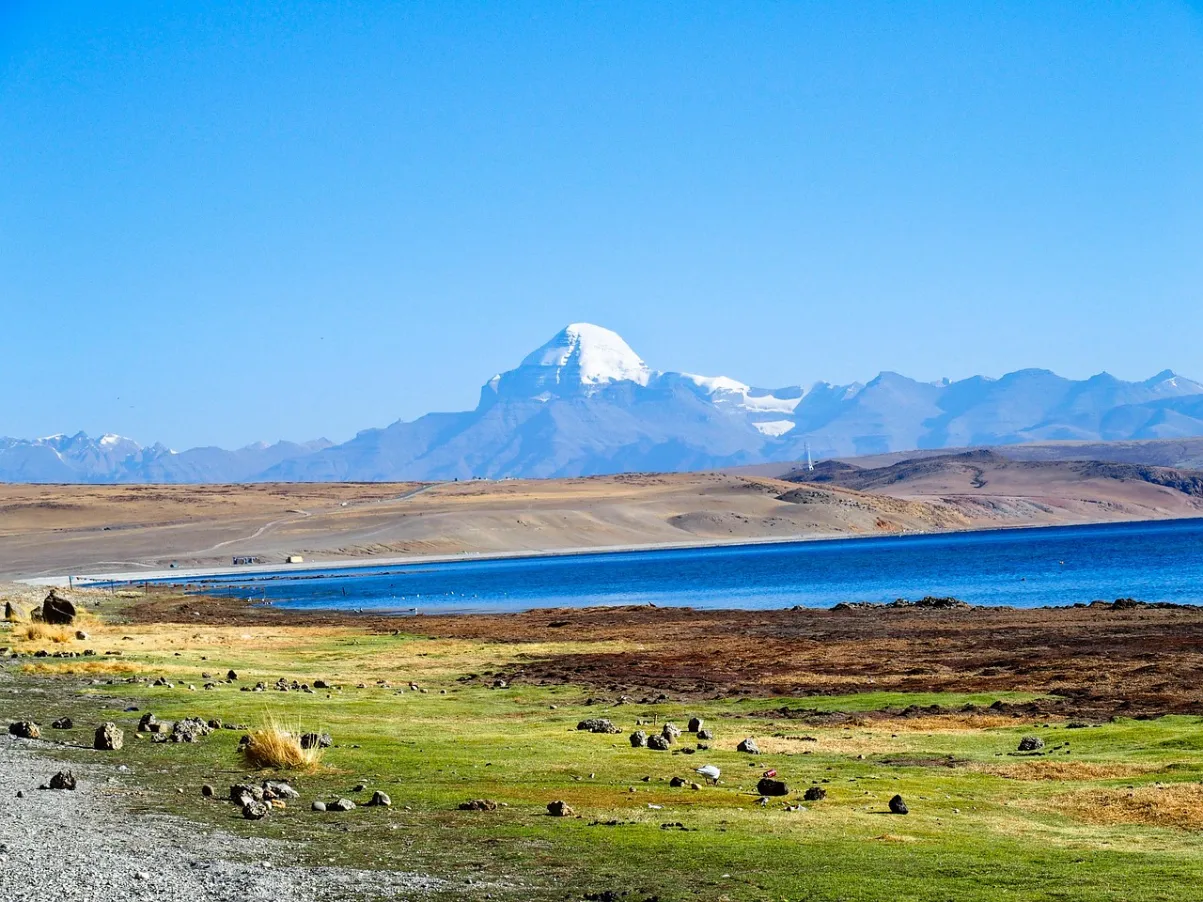
For locals, that everlasting snow is like a mark of sacredness, a pure white hat for a holy mountain. In stories, they say the snow doesn’t melt because Kailash is blessed. In reality, the temperatures up there often stay below freezing, and the winds and sun angles might just not clear that top.
But it’s more fun to imagine that the mountain chooses to keep its white cap on! From afar, the gleaming snow on Mount Kailash shines like a beacon. It reminds everyone that this peak is special, wearing nature’s badge of honor—a never-melting halo of snow that adds to its mystique.
10. Hidden Symbols and Faces in the Rock
Can a mountain show you secret pictures? If you visit Mount Kailash at the right time, you might see what many pilgrims talk about: mystical symbols appearing on its sides. As the sun sets, the mountain’s shadow can create the image of a huge swastika symbol on the rock.
(In Asian cultures, the Swastika (卐) is an ancient sign of good fortune, like a big cross with bent arms.) On another side of Kailash, the pattern of snow and black rock has been said to look like the syllable "Om (ॐ)," a sacred sound in Hindu and Buddhist traditions.
There’s even a legend that one of the mountain’s faces shows the visage of Lord Shiva, with eyes and a nose, watching over the land. Of course, these shapes are like seeing animals in clouds; our imaginations and the play of light make them appear.
Geologists would say it’s just the way the rocks are formed and how the sunlight hits them. But to a pilgrim’s eyes, these symbols and faces feel like the mountain is alive and speaking to them. It’s as if Mount Kailash is a giant stone canvas, and nature is painting on it at dawn and dusk. Children and adults alike can gaze at the mountain and invent what they see—a face, a sign, or maybe a secret message from the universe.
Each of these mysteries – from the unclimbed summit to the twin lakes and magical sunsets – shows why Mount Kailash and Lake Manasarovar inspire such awe. Whether explained by science or celebrated in spirit, these Himalayan wonders invite us to stay curious. They remind trekkers, pilgrims, and young adventurers that the world still holds beautiful secrets waiting to be discovered.