Navigation
What Did Scientists Find on Mount Kailash? Myths vs Facts Explained
Mount Kailash Is Mysterious, But Not in the Way Many People Think
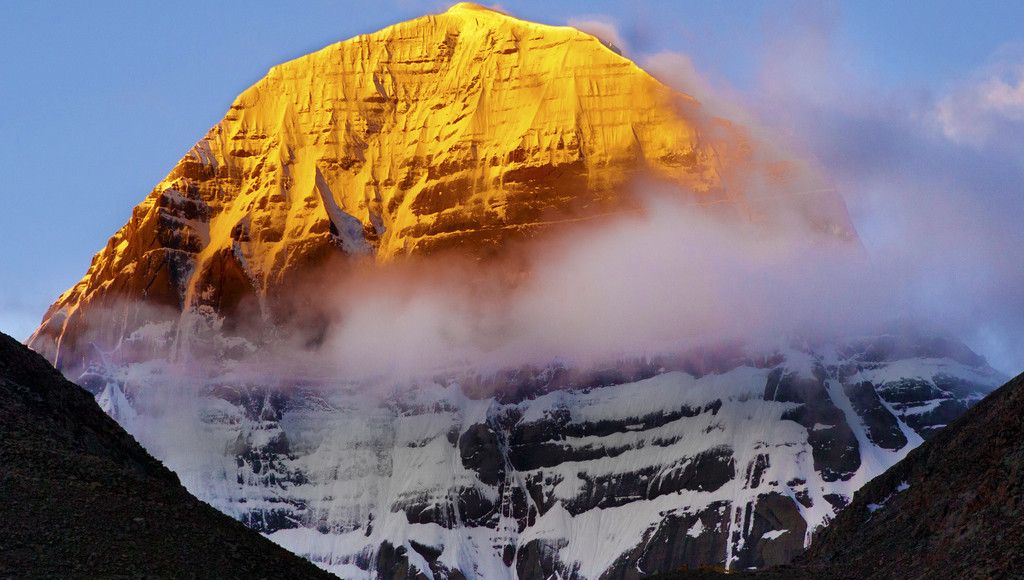
Mount Kailash has fascinated people for thousands of years. It is one of the world's most sacred mountains and is revered by Hindus, Buddhists, Jains, and followers of Bon. Every year, thousands of pilgrims travel to western Tibet to complete the Kailash Kora, a sacred walk around the mountain believed to bring spiritual merit.
But religion isn't the only reason people are curious about Mount Kailash.
Over the years, the mountain has become the center of countless online stories. Some claim it is a giant man-made pyramid. Others say NASA discovered strange energy fields, magnetic anomalies, or even evidence of time moving differently around the mountain.
These stories have spread widely across social media, YouTube videos, and blogs. But how much of it is actually true?
In this article, we'll separate scientific facts from popular myths. We'll look at what researchers have genuinely discovered about Mount Kailash, what satellite imagery reveals, and why this remarkable mountain continues to inspire both science and spirituality.
What Did Scientists Actually Find on Mount Kailash?
The short answer is simple. Scientists have not discovered any supernatural phenomena, hidden civilizations, alien structures, or unexplained energy fields on Mount Kailash.
What they have found is something fascinating in itself.
Researchers have identified Mount Kailash as:
-
A geologically unique mountain shaped over millions of years by tectonic activity and erosion.
-
A sacred peak surrounded by one of the most important hydrological regions in Asia.
-
A mountain with an unusually symmetrical appearance that naturally resembles a pyramid.
-
A region of great interest for geology, glaciology, and environmental research.
Satellite imagery has helped scientists study the mountain's terrain, glaciers, and surrounding landscape. However, no scientific organization, including NASA, has announced discoveries supporting claims about mysterious powers, time distortion, or alien construction.
The real story of Mount Kailash is not one of supernatural evidence. It is the combination of extraordinary natural features and deep spiritual significance that makes it unlike any other mountain on Earth.
Why Does Mount Kailash Fascinate Scientists?
Unlike Mount Everest or K2, Mount Kailash has never been climbed.
This isn't because climbing is impossible.
The mountain remains untouched out of respect for its religious importance. For millions of believers, Mount Kailash is not simply another Himalayan peak. It is regarded as the earthly home of Lord Shiva in Hinduism, the abode of Demchok in Tibetan Buddhism, and a sacred place in Jainism and Bon.
Because climbing is prohibited, much of what scientists know comes from satellite observations, geological surveys conducted around the mountain, and studies of the surrounding region.
Scientists are interested in Mount Kailash for several reasons.
Its unusual shape
From several angles, Mount Kailash appears remarkably symmetrical. Its steep faces and sharp summit create a pyramid-like appearance that immediately catches attention.
Although this has inspired many theories online, geologists explain that natural erosion, combined with the mountain's rock structure, can produce surprisingly regular shapes without any human involvement.
Its role in Asia's water system
The region around Mount Kailash is often called the "Water Tower of Asia."
Several major river systems originate near the mountain, including the Indus, Sutlej, Karnali (a major tributary of the Ganges), and the Yarlung Tsangpo, which later becomes the Brahmaputra.
These rivers support hundreds of millions of people across Tibet, Nepal, India, and Pakistan, making the region environmentally and geographically significant.
Its extreme environment
Located at an altitude of over 6,600 meters (21,778 feet), Mount Kailash experiences harsh weather, glaciers, and permanently cold conditions.
Studying these environments helps researchers better understand Himalayan geology, glacier behavior, and the long-term effects of climate change on high-altitude landscapes.
Is Mount Kailash Really a Giant Pyramid?
This is one of the most popular questions people ask. The answer depends on what you mean by "pyramid."
Mount Kailash certainly looks pyramid-shaped from certain viewpoints. Its four steep faces appear unusually smooth compared to many neighboring peaks, and the mountain has an impressive sense of symmetry.
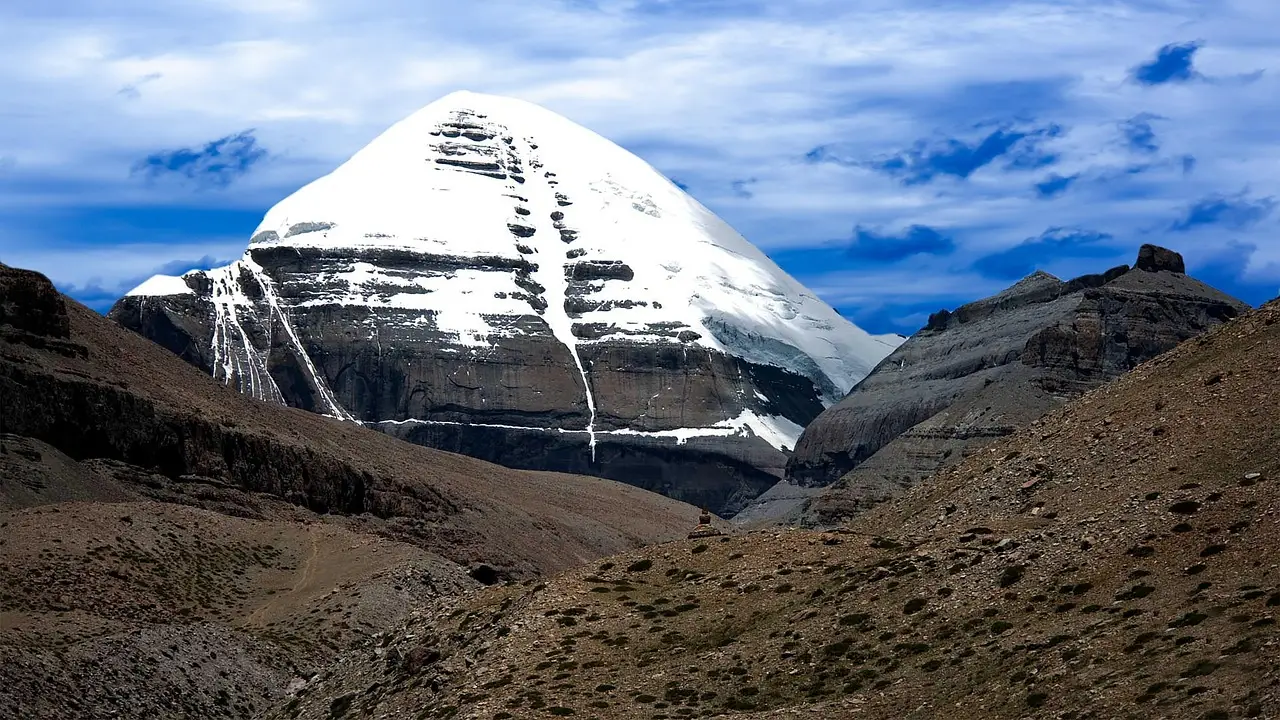
This distinctive appearance has led some people to suggest that it might be an ancient artificial structure or even the world's largest pyramid.
However, there is no scientific evidence to support those claims.
Geologists explain that Mount Kailash is the product of millions of years of natural geological processes. The Indian tectonic plate collided with the Eurasian plate, uplifting the Himalayas and the Tibetan Plateau. Over time, glaciers, ice, wind, and seasonal weather gradually carved the mountain into the striking shape we see today.
The mountain's rock formations also play a role in its appearance. Different rock layers weather at different rates, creating sharp ridges and nearly flat faces that can resemble architectural features from a distance.
Nature often produces surprisingly symmetrical landforms.
Just as basalt columns, natural arches, and perfectly hexagonal rock formations can look artificial, Mount Kailash's pyramid-like shape is another example of geology creating patterns that seem almost too perfect to be natural.
What Did NASA Really Find on Mount Kailash?
One of the biggest misconceptions online is that NASA launched a special investigation into Mount Kailash after discovering mysterious energy or unexplained structures.
That never happened.
NASA has never announced that Mount Kailash is an artificial pyramid, a source of unusual magnetic energy, or a place where time behaves differently.
So where did the story come from?
Like many remote parts of the world, the Tibetan Plateau has been photographed by Earth-observing satellites for decades. These images are collected for purposes such as mapping terrain, monitoring glaciers, studying land cover, and understanding environmental change.
Some of these publicly available satellite images clearly show Mount Kailash's striking pyramid-like appearance. As the images spread online, many people began attaching extraordinary claims to them, often incorrectly suggesting that NASA had confirmed mysterious discoveries.
In reality, the satellite imagery simply shows a remarkable natural mountain.
NASA's role has been limited to broader Earth observation programs, not investigating supernatural phenomena or ancient civilizations at Mount Kailash.
This distinction is important.
Satellite images can reveal the mountain's shape, surrounding lakes, glaciers, and landscape in remarkable detail. They cannot, by themselves, confirm myths about hidden energy fields, time warps, or alien structures.
The mountain is extraordinary enough without adding claims that science has never supported.
The Biggest Mount Kailash Mysteries: What Does Science Say?
Mount Kailash has inspired countless legends. Some have been passed down for centuries, while others became popular only after spreading across the internet.
Let's look at the most common claims and see what evidence actually says.
Does Mount Kailash Have a Magnetic Anomaly?
Many trekkers have shared stories of compasses behaving strangely around Mount Kailash. Some even claim GPS devices stop working or point in unusual directions.
These accounts have led to rumors that the mountain sits on a powerful magnetic field unlike anywhere else on Earth.
So, is it true?
There is no scientific evidence that Mount Kailash has an extraordinary magnetic anomaly.
Like many mountainous regions, the area contains different rock types and mineral deposits. Some rocks naturally contain magnetic minerals, which can slightly influence a compass at very short distances. Local terrain, weather conditions, and weak satellite signals in deep valleys can also affect navigation devices.
These are well-understood natural phenomena.
Scientists have never reported an unusually strong magnetic field around Mount Kailash, and NASA has never published research suggesting otherwise.
While occasional navigation issues can happen in remote mountain environments, they do not point to anything beyond normal geology.
Does Time Really Move Differently Near Mount Kailash?
Perhaps the most fascinating legend is that time behaves differently around Mount Kailash.
Some stories claim pilgrims noticed their hair or nails growing unusually fast. Others suggest that spending a short time near the mountain feels like several days.
It's an intriguing idea, but there is no scientific evidence that time passes differently at Mount Kailash.
Modern clocks function normally there, just as they do anywhere else on Earth.
So why do these stories exist?
High altitude offers one possible explanation.
The Kailash region sits well above 4,500 meters (14,700 feet), where oxygen levels are significantly lower than at sea level. Many visitors experience fatigue, headaches, dizziness, or changes in perception while adjusting to the altitude.
Emotional experiences can also change how we perceive time. Completing the Kailash Kora is often described as a deeply spiritual journey. Moments of awe, exhaustion, and intense focus can make hours feel much longer or much shorter than they actually are.
This is a psychological effect, not evidence that time itself changes.
Did Scientists Find the Face of Lord Shiva?
One of the mountain's most famous features is what many people believe looks like the face of Lord Shiva.
From certain angles, especially when light and shadows fall across the western face of the mountain, the rock formations appear to resemble human facial features.
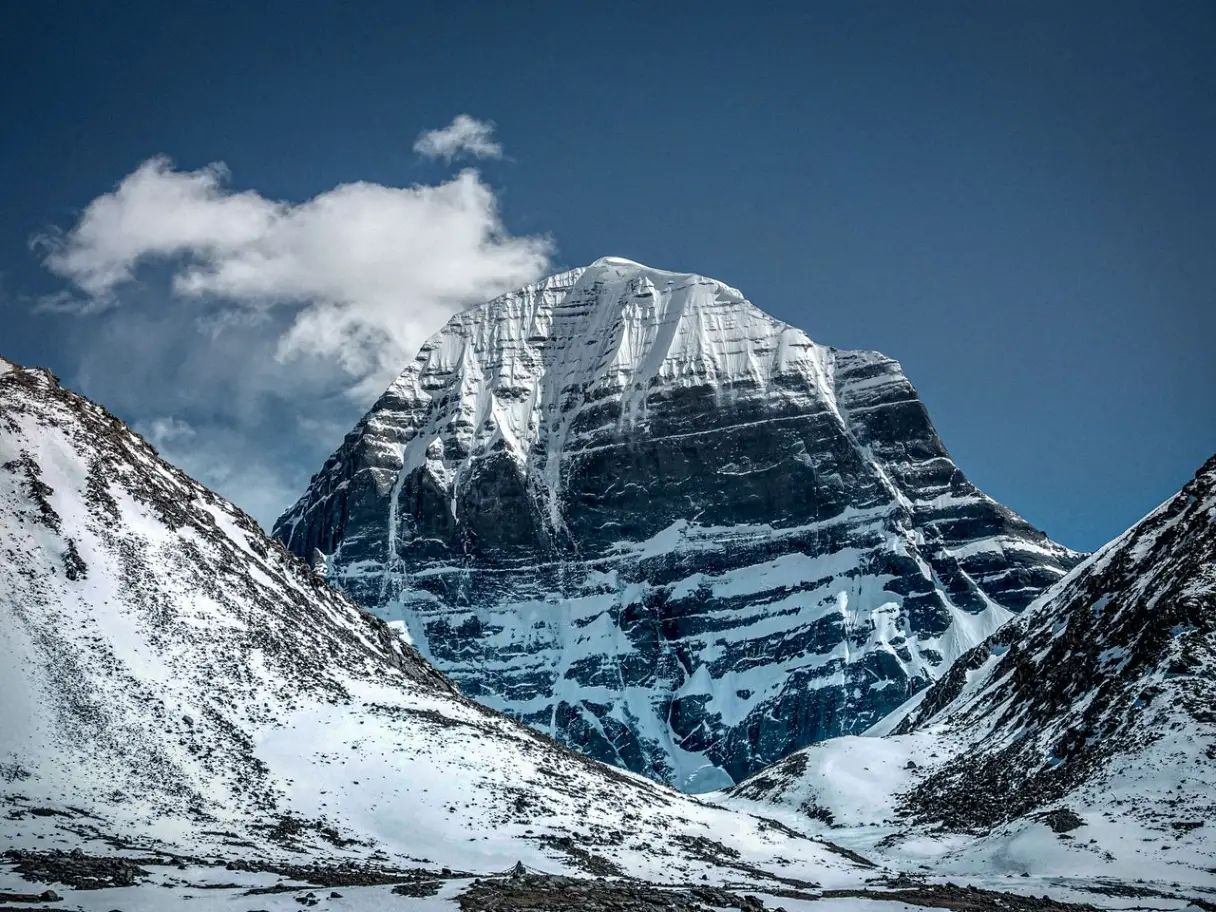
For many Hindu devotees, this resemblance carries deep spiritual meaning.
From a scientific perspective, however, this is an example of pareidolia.
Pareidolia is the tendency of the human brain to recognize familiar patterns, especially faces, in random objects. It's the same reason people sometimes see animals in clouds or faces on the surface of the Moon.
Scientists do not view the rock formation as a carved image or an artificial structure.
At the same time, science does not dismiss the spiritual meaning that believers attach to it. One explains how the pattern appears, while the other explains what it represents to those who hold it sacred.
The two perspectives answer different questions.
Is Mount Kailash Radioactive?
Another claim that frequently appears online is that Mount Kailash emits unusual levels of radiation.
There is no credible scientific evidence supporting this claim.
No peer-reviewed geological study has reported dangerous radiation levels around the mountain, and no scientific organization has identified Mount Kailash as a radioactive location.
The confusion often comes from mixing different scientific concepts.
Natural rocks can contain magnetic minerals.
Some rocks contain trace amounts of naturally occurring radioactive elements.
Neither of these facts means a mountain is dangerous or mysterious.
Without reliable measurements showing abnormal radiation, these claims remain unsupported.
Is There a Hidden City Inside Mount Kailash?
Legends of hidden kingdoms have surrounded Mount Kailash for centuries.
In Tibetan Buddhist tradition, the mythical kingdom of Shambhala represents an enlightened realm associated with wisdom and spiritual awakening.
Other legends speak of hidden chambers or underground cities beneath the mountain.
These stories are an important part of the region's religious and cultural heritage.
However, no archaeological or geological survey has found evidence of underground civilizations, artificial tunnels, or hidden cities inside Mount Kailash.
Scientists understand the mountain as a naturally formed geological structure.
The legends remain valuable because they reflect centuries of spiritual belief, not because they have been confirmed through scientific investigation.
The Truth Behind the "6,666 Kilometres" Mystery
One of the internet's most persistent claims is that Mount Kailash lies exactly 6,666 kilometers from the North Pole, Stonehenge, and even the South Pole.
This supposed numerical alignment is often presented as evidence that the mountain occupies the "center of the world."
The claim sounds impressive.
Unfortunately, it isn't accurate.
Modern GPS measurements show that these distances do not match the often-quoted figures. The exact numbers vary depending on the measurement method and the locations being compared, but they are not the repeated "6,666 km" values shared online.
Researchers consider this another example of a viral internet myth rather than a meaningful geographical discovery.
That doesn't make Mount Kailash any less remarkable.
Its importance comes from its religious history, dramatic landscape, and geographical setting, not from mathematical coincidences that don't hold up under accurate measurement.
Why Has Nobody Climbed Mount Kailash?
Unlike many famous mountains, Mount Kailash remains completely unclimbed.
This often leads people to wonder whether the mountain is impossible to ascend.
The real reason is much simpler.
Mount Kailash is considered sacred by millions of people.
For Hindus, it is the home of Lord Shiva.
For Tibetan Buddhists, it is associated with Demchok, a deity representing supreme bliss.
Jains believe it is where the first Tirthankara attained liberation.
Followers of Bon also regard it as one of their holiest sites.
Out of respect for these beliefs, climbing the mountain is prohibited by the Chinese authorities, and the international mountaineering community has generally supported preserving its sanctity.
Instead of climbing the summit, pilgrims complete the Kailash Kora, a circuit of approximately 52 kilometers around the mountain.
For many, this journey is far more meaningful than reaching the peak itself.
The mountain remains one of the few great peaks on Earth whose greatest achievement is not standing on its summit but walking respectfully around it.
Science and Spirituality Can Both Appreciate Mount Kailash
Mount Kailash is one of those rare places where science and spirituality meet without needing to compete.
Science helps us understand how the mountain was formed, why it looks so distinctive, and how the surrounding landscape supports some of Asia's most important river systems. It relies on observation, evidence, and careful research.
Spiritual traditions offer a different perspective. For millions of people, Mount Kailash is not simply a geological formation. It is a place of prayer, pilgrimage, reflection, and deep personal meaning. Its value comes from centuries of faith and cultural heritage rather than scientific measurement.
The two viewpoints answer different questions.
Science explains how the mountain came to be.
Faith explores what the mountain means.
Whether you visit Mount Kailash as a traveler, a trekker, or a pilgrim, understanding both perspectives makes the journey even more meaningful.
Final Thoughts
So, what did scientists actually find on Mount Kailash?
Not alien pyramids. Not mysterious energy fields. Not time warps.
Instead, they found something equally remarkable.
Mount Kailash is a unique mountain shaped by powerful geological forces over millions of years. It stands near the origins of some of Asia's most important rivers, dominates the surrounding landscape with its striking symmetry, and continues to attract researchers studying the Tibetan Plateau.
At the same time, its greatest significance cannot be measured with satellite images or geological surveys alone.
For countless pilgrims, Mount Kailash represents faith, devotion, and inner transformation. For travelers, it offers breathtaking scenery and one of the world's most unforgettable trekking experiences. For scientists, it remains an important natural landmark that helps us better understand one of Earth's most remarkable mountain regions.
Perhaps that's why Mount Kailash continues to capture people's imagination.
The facts are fascinating.
The stories are timeless.
And together, they make this sacred mountain unlike anywhere else on Earth.
If you're planning to experience Mount Kailash for yourself, preparing with accurate information will help you appreciate both its natural beauty and its profound spiritual importance.
Frequently Asked Questions (FAQs)
Did NASA discover anything unusual on Mount Kailash?
No. NASA has not reported discovering mysterious energy fields, alien structures, time distortions, or supernatural phenomena on Mount Kailash. Satellite imagery has been used for Earth observation, including mapping terrain, glaciers, and environmental changes, not to investigate myths surrounding the mountain.
Is Mount Kailash actually a giant pyramid?
No. Although the mountain has a remarkably symmetrical, pyramid-like appearance, geologists consider it a natural landform shaped by tectonic activity and millions of years of erosion. There is no evidence that it was built by humans or any ancient civilization.
Why is Mount Kailash considered mysterious?
Its mystery comes from a combination of factors. The mountain has never been climbed, it is sacred to four major religions, and it has inspired legends for centuries. These cultural and spiritual stories often become mixed with modern internet myths, making it difficult to separate fact from fiction.
Why can't people climb Mount Kailash?
Climbing Mount Kailash is prohibited out of respect for its religious significance. Instead, pilgrims complete the Kailash Kora, a sacred circuit around the mountain that is considered one of the most important spiritual journeys in the region.
Can tourists visit Mount Kailash?
Yes. International visitors can travel to the Mount Kailash region as part of an organized tour after obtaining the required permits for Tibet. Most visitors come to complete the Kailash Kora and visit the nearby Lake Manasarovar.
Is Mount Kailash worth visiting even without the mysteries?
Absolutely.
Even without the myths, Mount Kailash is one of the most extraordinary destinations in the Himalayas. Its dramatic landscape, centuries-old pilgrimage traditions, peaceful atmosphere, and cultural significance make it a once-in-a-lifetime experience for many travelers.