
Navigation
Singapore Food Tours & Hawker Culture: Eating Like a Local
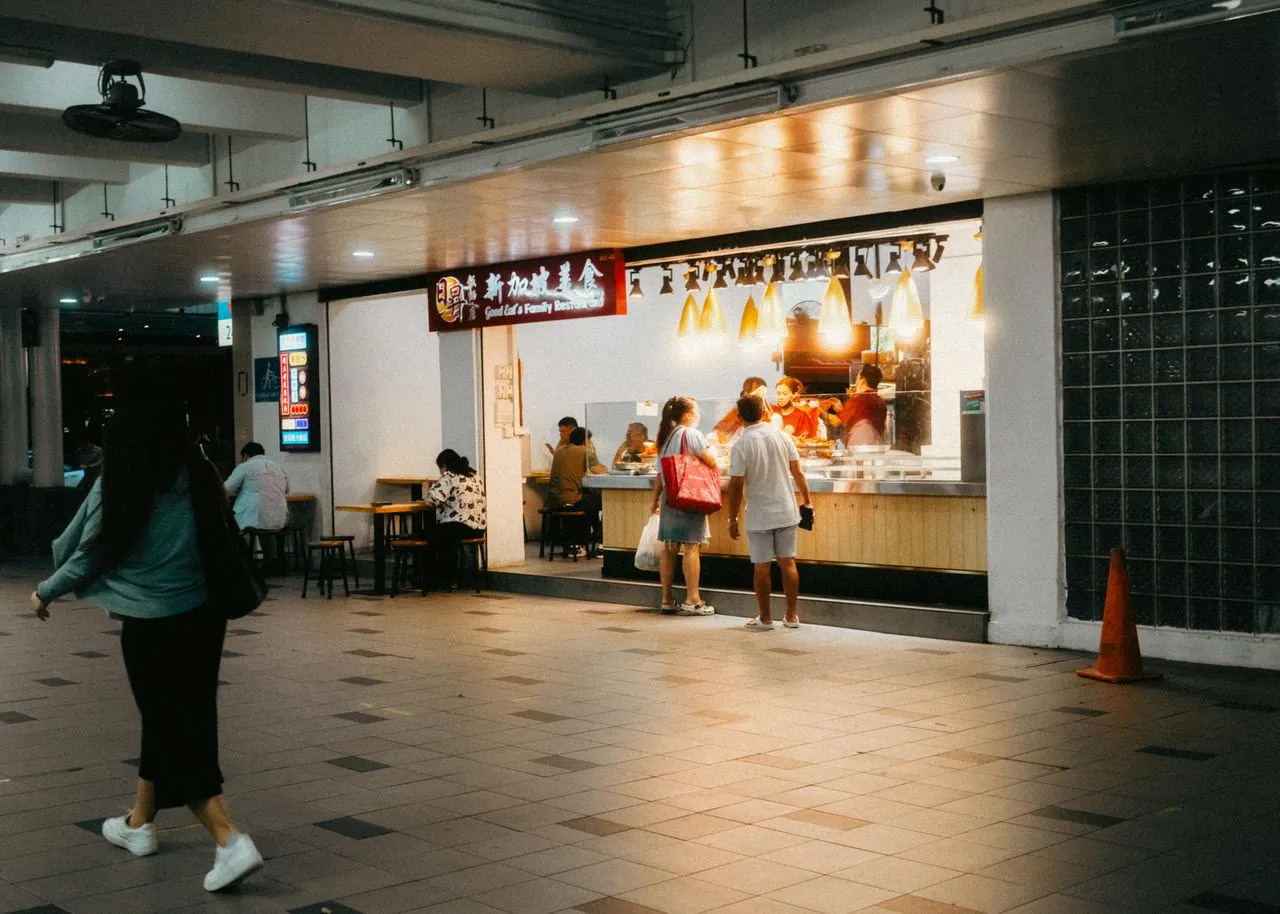

You do not need to book a food tour to eat well in Singapore. Hawker centers make it easy to try local dishes on your own, often with dozens of stalls under one roof.
What a good Singapore food tour adds is context. A guide can explain where different dishes come from, introduce foods you might otherwise miss, help you navigate busy hawker centers, and let you sample several dishes without ordering a full meal at every stop.
So the real question is not whether Singapore’s food is worth exploring. It is how you want to explore it.
This guide explains how Singapore’s hawker culture works, what to try, where first-time visitors can experience it, and when paying for a guided food tour makes sense.
What Makes Singapore’s Hawker Culture Different?
A hawker center is more than a collection of inexpensive food stalls.
Singapore’s modern hawker centers grew from an earlier street-hawking tradition. As the city developed, street vendors were gradually moved into purpose-built centers with permanent stalls and basic facilities. Over time, these centers became part of everyday neighborhood life rather than places created mainly for visitors.
That social role is one reason Singapore’s hawker culture was added to UNESCO’s Intangible Cultural Heritage list in 2020. UNESCO describes hawker centers as community dining spaces where people from different backgrounds come together over food. The recognition applies to the culture, knowledge, and social practices around hawker food, not to individual hawker centers as UNESCO World Heritage Sites.
The food also reflects Singapore’s history as a multicultural trading city. Chinese, Malay, Indian, and other culinary traditions developed alongside one another, adapting to local ingredients and tastes. That is why one hawker center might serve chicken rice, biryani, laksa, satay, noodles, prata, and desserts from very different traditions.
For a traveler, eating at a hawker center can tell you more about Singapore than simply working through a list of famous dishes. What you order matters, but so does seeing how different food traditions fit into everyday life.
Food Tour or DIY Hawker Crawl: Which Is Better for You?
For most travelers, either approach can work well.
The difference comes down to how much guidance, flexibility, and cultural context you want.
Exploring independently gives you more freedom over where you go, when you eat, and how much you order. A guided tour becomes more useful when you want someone to explain the food, plan the route, and make it easier to sample several things in one outing.
A Food Tour Makes More Sense If...
A guided food tour can be useful on a first visit if you want to understand what you are eating without researching everything yourself.
It may suit you particularly well if:
- you have limited time
- large hawker centers feel overwhelming
- you want to try several dishes in smaller portions
- you are interested in the history behind different cuisines
- you want to explore more than one food neighborhood
- you prefer having the route and ordering handled for you
It can also work well for solo travelers. Ordering several full dishes on your own can quickly become too much food, while a tasting-based tour may let you try a wider range.
The main thing to understand is that you are not paying primarily for the ingredients.
You are paying for curation, guide knowledge, cultural explanation, route planning, and convenience.
Exploring Independently Makes More Sense If...
A DIY hawker crawl may suit you better if the food itself matters more than having someone explain it.
Independent exploration also works well for travelers who want to keep food costs lower—especially when combined with other free and budget-friendly things to do in Singapore, and enjoy researching what to eat.
You also have complete control over the pace. You can stay longer at one center, return to a stall you liked, or stop eating when you are full instead of following a fixed tasting schedule.
Independent exploration usually works well for travelers who:
- want to keep food costs lower
- enjoy researching what to eat
- have enough time to try different places over several days
- already know which dishes interest them
- do not mind queues or busy centers
- prefer choosing every portion themselves
If you have several days in Singapore, there is also no need to squeeze ten different foods into one afternoon. Trying different hawker centers naturally throughout your trip can be much more relaxed.
|
Consideration |
Guided food tour |
DIY hawker exploration |
|
Cost |
Higher |
Usually lower |
|
Flexibility |
Fixed route and timing |
Very high |
|
Cultural explanation |
Usually stronger |
Depends on your research |
|
Variety in one outing |
Easier to arrange |
Requires more planning |
|
Ordering and navigation |
Mostly handled for you |
You manage it yourself |
|
Pace |
Set by the tour |
Entirely your choice |
|
Best for |
Context and convenience |
Freedom and value |
Neither approach is automatically more “local.” A guided visit to a famous hawker center can still teach you something meaningful. And searching for supposedly secret stalls on your own does not automatically make the experience more authentic.
How to Navigate a Hawker Center for the First Time
Hawker centers can look chaotic at first, with several stalls, queues, and shared tables all operating at once. Once you understand the basics, the system is fairly straightforward.
Find Somewhere to Sit
During busy periods, it can make sense to find a seat before ordering, especially if you are with someone who can stay at the table while others get the food.
You may notice tables or seats that look empty but have a tissue packet or another small item sitting on them. This is commonly known as “chope”, a Singaporean practice of reserving a seat while going to buy food.
Sharing tables is also normal, so sitting beside another diner is nothing unusual.
Do not leave passports, phones, or other valuables unattended just to reserve a seat.
Look Around Before Ordering
There is rarely a good reason to order from the first stall you see.
Walk around first and see what different stalls specialize in. Many hawkers focus on only a few dishes, so it is perfectly normal for people at the same table to eat food bought from different stalls.
Queues can be useful signs of popularity, but a long line does not prove that one stall is objectively better. At busy centers, it may simply be famous.
If something catches your attention, look at what people are actually ordering rather than relying only on awards or social media popularity.
Ordering Is Usually Straightforward
Most stalls display their dishes and prices clearly. If you do not know the name of something, pointing to what you want is usually fine.
Depending on the stall, you may collect the food yourself, receive a queue number, or be asked where you are sitting. If your table has a number, remember it before joining the queue.
You also do not need to order your whole meal from one stall. Couples and groups can easily buy different dishes from several places and share them.
Bring More Than One Way to Pay
Cashless payment has become much more common among Singapore’s hawkers. The government-backed Hawkers Go Digital program encourages stallholders to accept SGQR electronic payments, and the system remains active in 2026.
However, the payment methods available still depend on the individual stall and whether your own bank or payment app works with the system being used.
For international visitors, carrying some Singapore dollars as a backup is still sensible, even if you usually prefer digital payments.
Clear Your Table When You Finish
Returning trays and used crockery is not just good etiquette. Singapore’s Clean Tables rules require diners at hawker centers to clear their trays, used crockery, and litter after eating, apart from certain specialized items handled by staff.
Look for the tray-return station instead of leaving everything on the table.
It is a simple part of using the space properly.
What Should You Eat? Choose by Taste, Not by Checklist
Singapore has too many food traditions to realistically “complete” them all during a short trip.
Instead of trying to eat every famous dish, choose foods based on the flavors and eating styles you already enjoy.
If You Want Something Mild and Easy to Start With
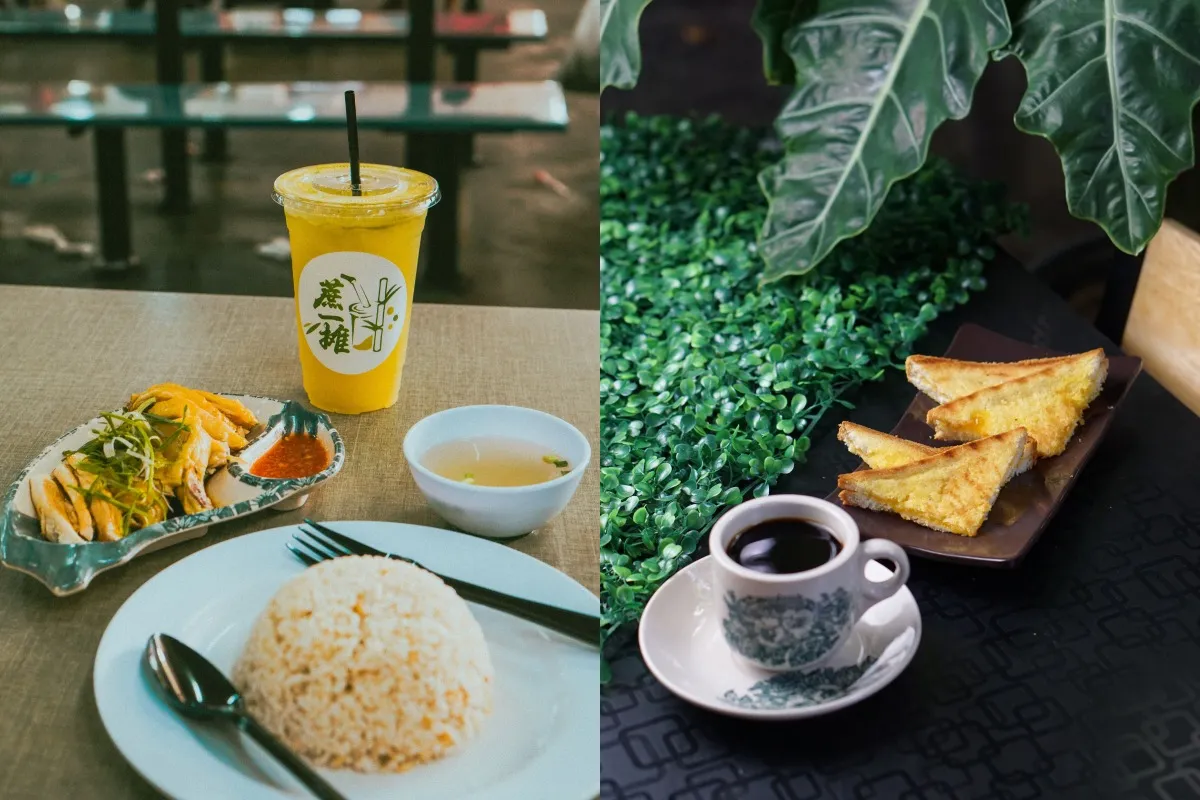
Hainanese chicken rice is one of the easiest places to start.
It usually combines poached or roasted chicken with fragrant rice and sauces on the side. The dish itself is relatively mild compared with richer or chilli-heavy options, although the accompanying chilli sauce can add heat.
Kaya toast is another approachable choice, especially for breakfast. Toast is spread with kaya, a sweet coconut-and-egg jam, usually together with butter. It is commonly served with eggs and local coffee or tea.
Neither dish needs to be treated as something you absolutely must eat. They are simply good choices if you prefer familiar textures and gentler flavors.
If You Prefer Richer Noodle Dishes
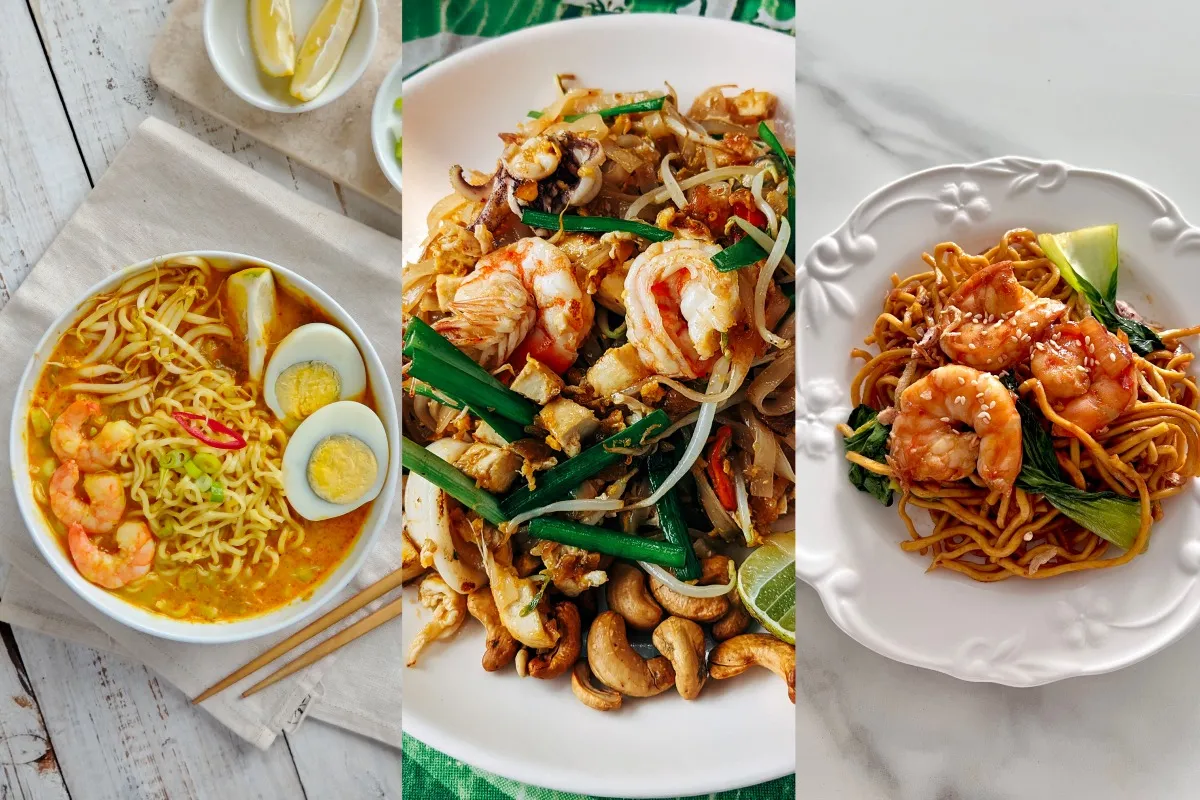
Laksa is a good choice if you enjoy spicy, coconut-rich flavors. Different versions exist, but the Singapore styles most travelers come across usually combine noodles with a fragrant, savory broth.
Char kway teow is quite different. Flat rice noodles are stir-fried at high heat with savory ingredients, giving the dish a richer, smokier flavor.
Hokkien mee is another option if seafood-based noodles appeal to you. It gives you a different choice from the coconut-rich laksa or smokier char kway teow.
If You Want Fragrant Rice and Bolder Flavors
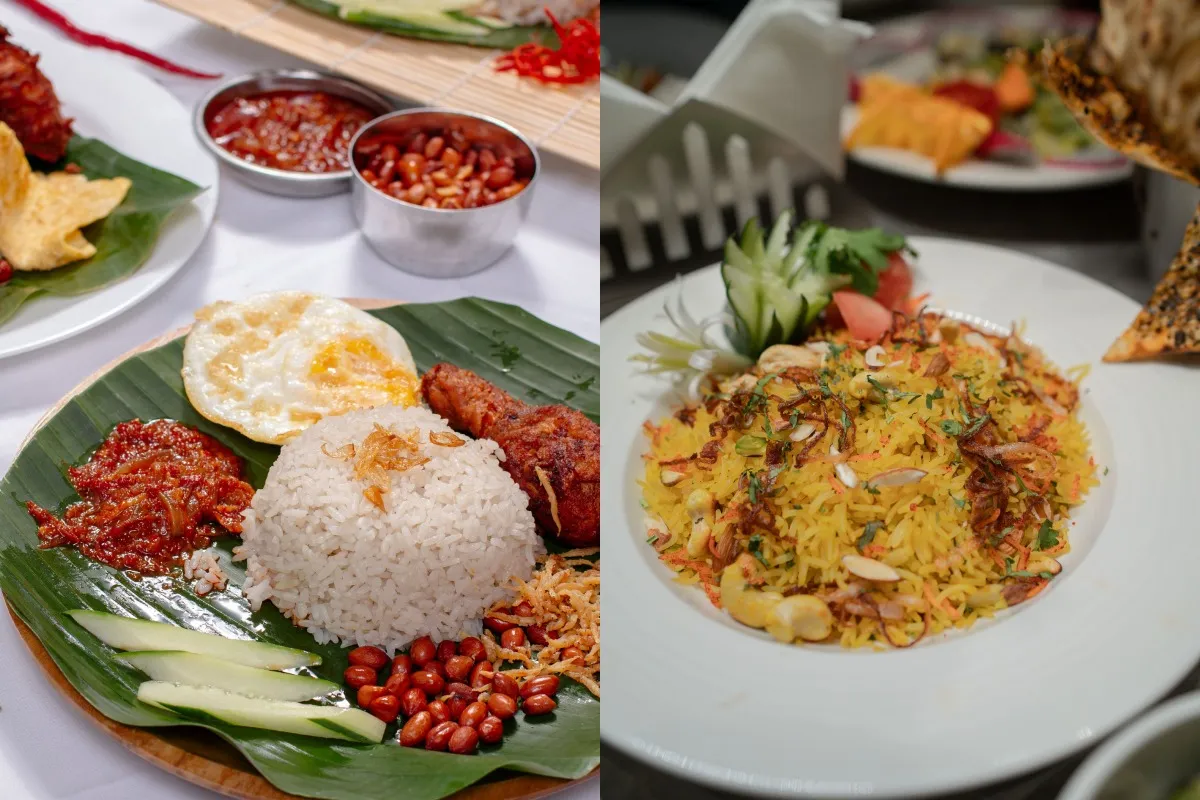
Nasi lemak is built around fragrant rice cooked with coconut milk, with accompaniments that vary from stall to stall. These might include egg, sambal, fish, chicken or other additions.
Biryani offers a different kind of rice dish, with aromatic spices and meat or other accompaniments. If this side of Singapore’s food culture interests you, Little India is an obvious area to explore.
Both dishes can be quite filling, so they may not be ideal if you plan to sample another six foods straight afterwards.
If You Want Something Easier to Share
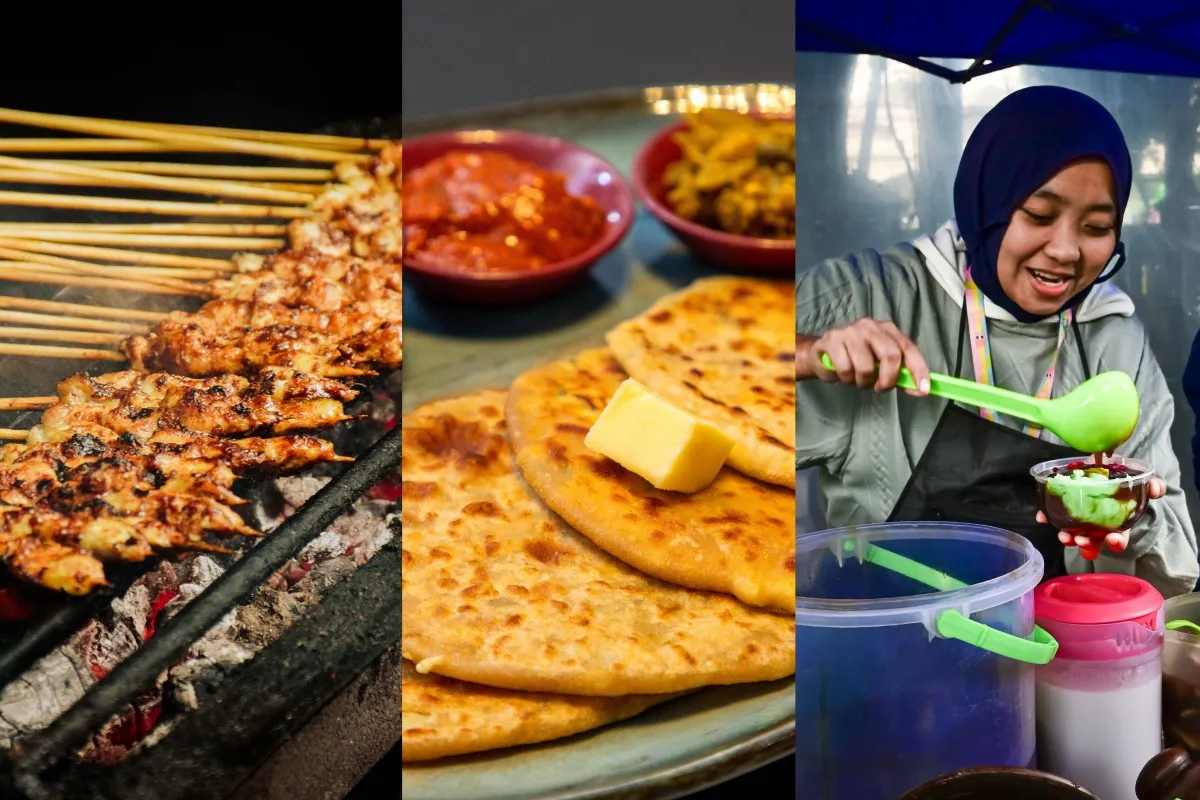
Satay works especially well for groups. The grilled skewers can be ordered in quantities that are easy to share and are often served with a peanut-based sauce.
Roti prata, a crisp, flaky flatbread usually eaten with curry, can work as breakfast, a snack, or a casual meal rather than part of a large tasting session.
For dessert, chendol offers something completely different, usually combining shaved ice with ingredients such as coconut milk, palm sugar syrup, and green jelly.
If Seafood Is Your Priority
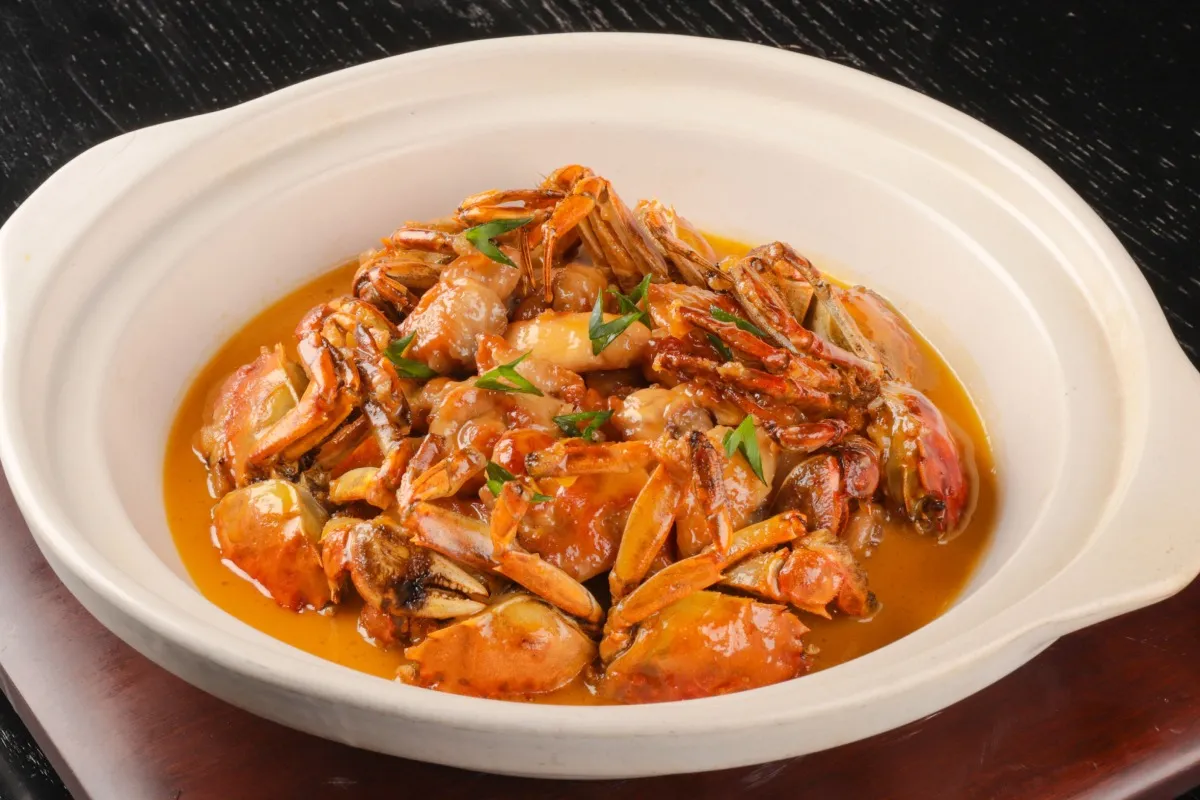
Singapore has plenty of well-known seafood dishes, but not all of them fit naturally into a hawker crawl.
Chilli crab, for example, can be a substantial meal on its own. It often makes more sense as a separate dining experience rather than something squeezed between several hawker tastings.
At hawker centers, dishes such as oyster omelette or grilled seafood may be easier to share as part of a wider meal.
Where Should a First-Time Visitor Experience Singapore’s Hawker Culture?
You do not need to visit every famous food center in Singapore.
For a first visit, choosing one or two places based on the neighborhoods and food traditions that already interest you usually makes more sense.
Chinatown: The Easiest Starting Point
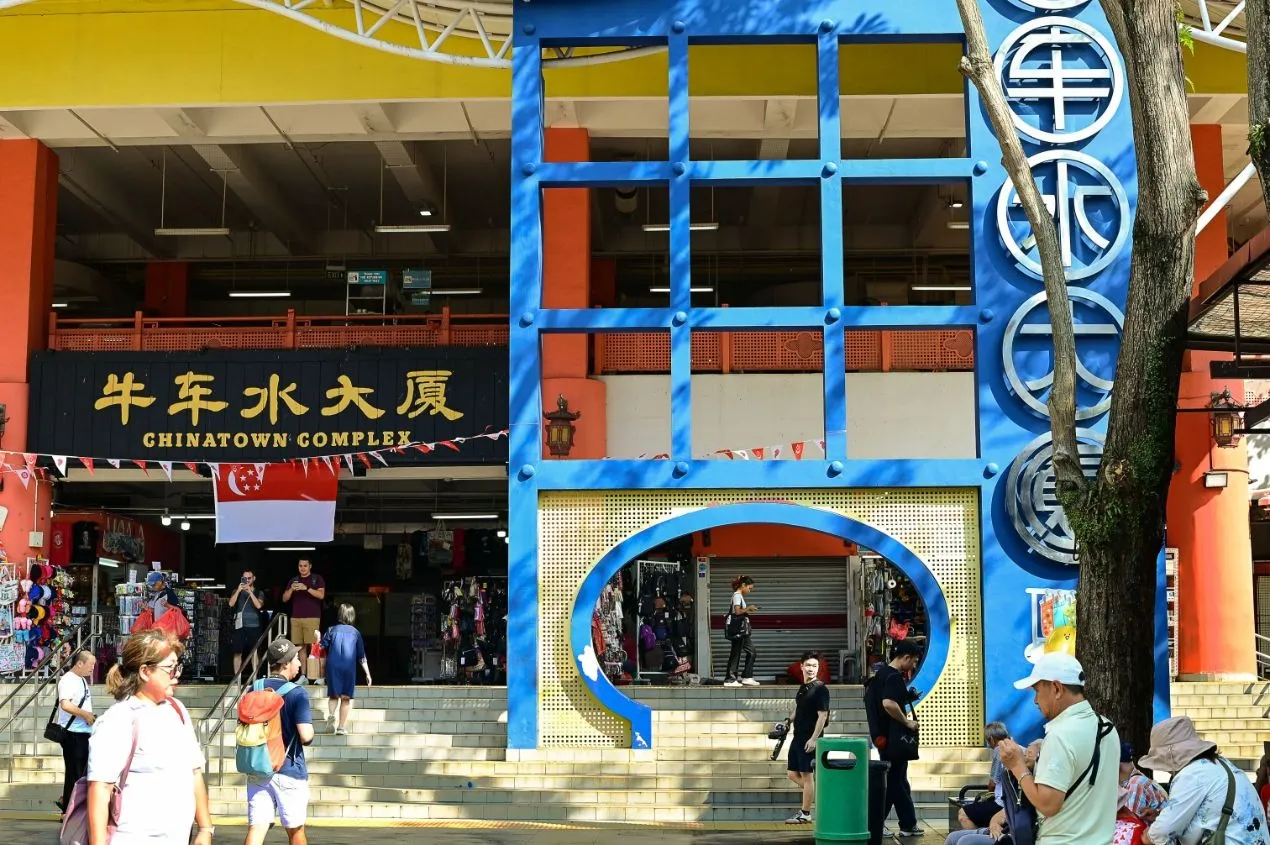
Chinatown is particularly convenient because the Maxwell Food Center and the Chinatown Complex Food Center can easily be combined with exploring the surrounding heritage district or taking a self-guided free walking tour in Singapore.
Maxwell is a straightforward introduction to the hawker-center format and is well known for local staples such as chicken rice. Chinatown Complex offers a much larger selection and is Singapore’s largest food center.
Both centers attract plenty of visitors, and famous stalls can have long queues, but their convenience makes them practical choices for a first visit.
Tekka Center: Best When Food and Little India Belong Together
If Indian food traditions are a priority, the Tekka center makes more sense than choosing a random Indian food stall elsewhere simply because it appears on a “best food” list.
Located in Little India, it combines prepared food with a major wet market selling fresh produce, spices and other ingredients. This gives the meal more neighborhood context than visiting an isolated food stop.
It is especially convenient if Little India is already part of your plans.
Geylang Serai: For Malay Food Heritage
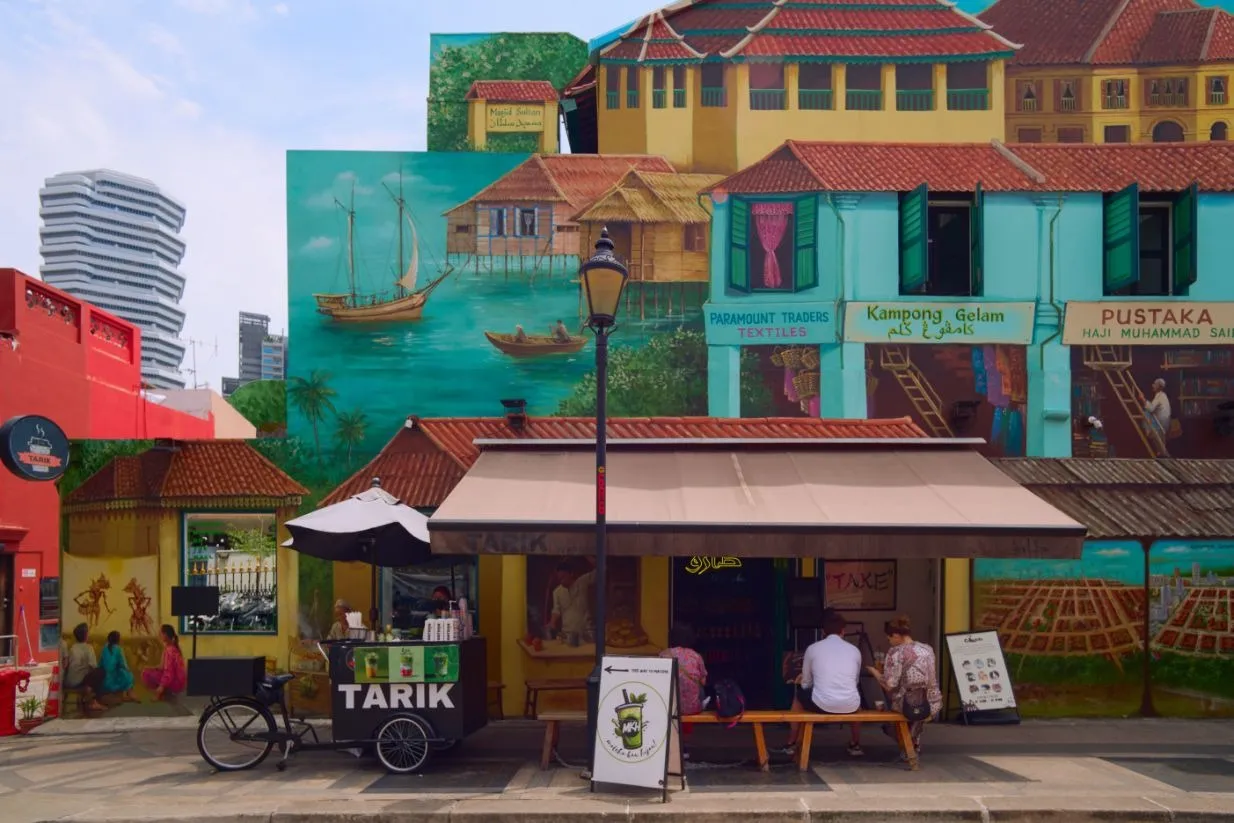
Travelers who want to explore Singapore’s Malay food culture in more depth can look beyond the most central visitor districts to Geylang Serai Market & Food Center.
The area has a long connection with Singapore’s Malay community, and the market developed as an important social and commercial center for the surrounding neighborhood.
It is therefore a stronger choice if Malay food heritage is a major part of what you want to explore, rather than simply another hawker center to add to a list.
Individual stalls and centers can close for cleaning, renovation, or regular rest days, so check current opening information before making a special trip.
Lau Pa Sat: Best for a Convenient Evening Experience
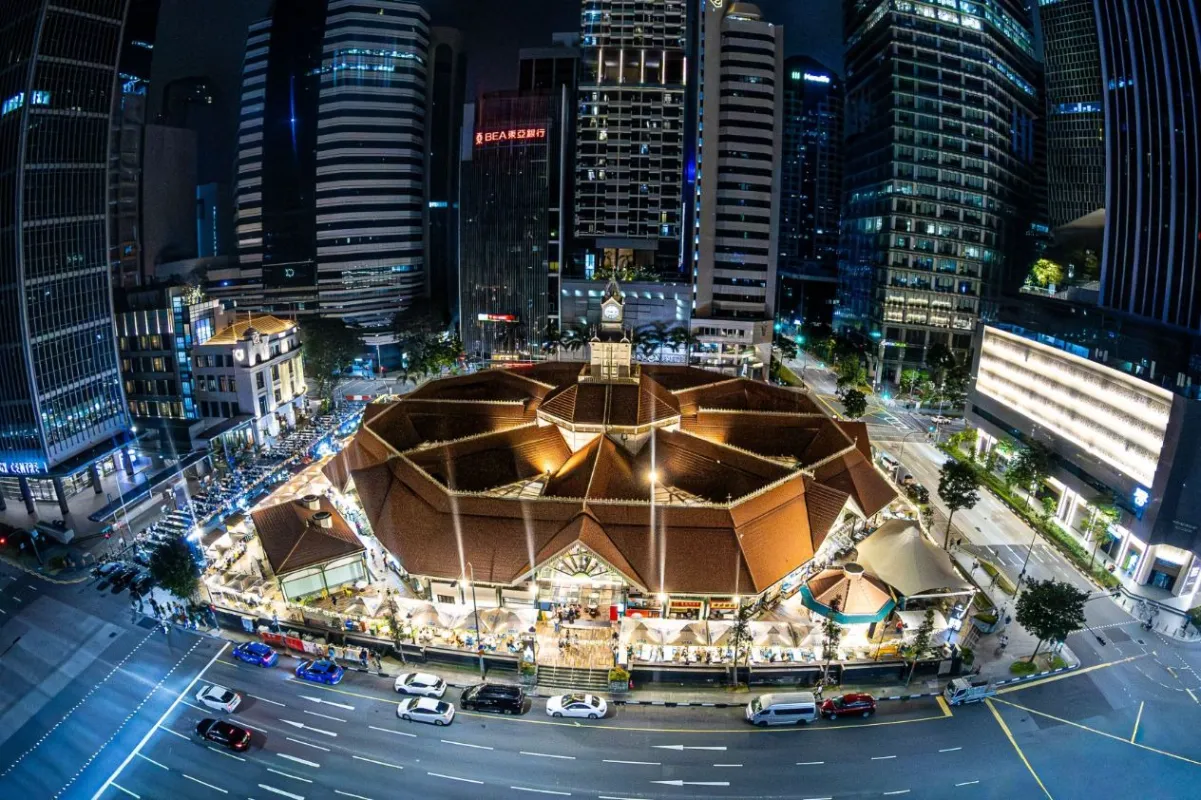
Lau Pa Sat is one of the easiest hawker experiences to combine with Marina Bay and the central business district.
Its historic building and central location give it a different atmosphere from many neighborhood hawker centers. In the evening, the nearby Boon Tat Street satay area becomes a major part of the experience and is a popular choice for an evening meal.
The trade-off is simple: it is famous, polished, and heavily visited.
If you mainly want to see a neighborhood hawker center used by nearby residents, there are better options elsewhere. But if you want a lively and convenient evening meal while exploring central Singapore, Lau Pa Sat makes sense.
How to Choose a Singapore Food Tour Before You Book
Once you have decided that a guided tour suits you, the next question is what kind of food tour you are actually paying for.
Do not choose based only on the number of dishes advertised.
Two Singapore food tours may promise a similar number of tastings but offer very different experiences.
Look at the Route, Not Just the Number of Stops
Start by checking where the tour actually goes.
A tour focused entirely on Chinatown may spend more time explaining one neighborhood and its food traditions. A route that covers Chinatown, Little India, and another district can introduce you to a broader range of influences, but more of the tour will naturally be spent moving between places.
Neither approach is automatically better.
Choose depth if you enjoy detailed cultural context and slower exploration. Choose variety if your time in Singapore is limited and you want an introduction to several food traditions in one outing.
Also check whether the experience is mainly focused on hawker food or mixes hawker stalls with markets, restaurants, cafés, and sightseeing. The words “food tour” alone do not tell you what the experience includes.
Do Not Judge a Tour Only by the Number of Tastings
“Ten tastings” may sound better than six, but the number does not tell you how substantial those tastings are.
A tasting might be:
- a substantial shared dish
- a few bites
- a drink
- dessert
- a snack
- a small portion divided among several people
Look at the overall variety rather than simply choosing the tour with the largest number.
A well-paced tour that helps you understand six genuinely different foods may be more enjoyable than rushing through twelve similar samples.
It is also worth checking whether some dishes are shared. This can matter if you have particular hygiene preferences or prefer not to eat from communal dishes.
Check the Group Size and Tour Style
Private and small-group food tours usually give you more opportunity to interact with the guide.
That can be important if one of your main reasons for booking is to ask questions about Singaporean culture, ingredients, or neighborhood history.
Larger groups may cost less, but they can move more slowly through busy hawker centers, and it may be harder to have individual conversations with the guide.
Private tours may offer more flexibility around pace or interests, but “private” does not always mean fully customizable. Check what the operator actually allows before booking.
Find Out How Much Cultural Context Is Included
Some food tours mainly solve the practical side of the experience:
Here are good stalls. Follow us and eat.
Others use food to explain migration, neighborhood development, religion, family businesses, and how Singapore’s different communities shaped the dishes being served.
If the idea of “eating like a local” is what attracted you to the tour, that difference matters.
Read the itinerary carefully and look for reviews that mention what the guide actually explained, not only whether the food was good.
Check Duration, Walking, and Time of Day
Do not assume a food tour requires little effort just because eating is the main activity.
You may still spend time walking outdoors between neighborhoods, standing in queues, using stairs or public transport, and dealing with Singapore’s heat and humidity.
A longer tour can give you more depth, but it can also become tiring if it takes up most of the afternoon.
If you are only in the city on a long transit connection, a dedicated Singapore layover or stopover tour may fit your schedule better than a standard half-day hawker crawl.
Check:
- how far you will walk
- whether transport between areas is included
- how much time you will spend outside
- whether you will have regular chances to sit
- whether the tour runs around midday or in the evening
- whether the pace suits children or anyone with limited mobility
This becomes especially important if the food tour is only one part of a busy sightseeing day.
Ask About Dietary Needs Before Booking
Singapore’s multicultural food scene offers plenty of choice, but that does not mean every fixed food-tour route can accommodate every dietary requirement.
If you are vegetarian, vegan, require halal food, avoid pork, or have an allergy, ask about the specific tastings before paying.
Pay particular attention to:
- shellfish and seafood
- broths and sauces
- cooking fats
- shared preparation areas
- fixed hawker stalls that may not be able to substitute ingredients
When a tour says it can “accommodate dietary requirements,” that may mean certain tastings are replaced or skipped rather than recreated in a similar form.
For serious food allergies, ask the operator directly about cross-contact. They can explain their own arrangements more accurately than a general Singapore travel guide can.
Consider Taking the Tour Early in Your Trip
If you decide to book a food tour, doing it near the beginning of your stay can be useful.
What you learn can help with the rest of your trip.
After a good introductory tour, you may have a better idea of:
- which dishes you want to eat again
- how to navigate hawker centers on your own
- which neighborhoods you want to revisit
- how ordering works
- what unfamiliar menu terms mean
- which other stalls or food areas the guide recommends
In that sense, the tour can also work as an introduction to eating independently in Singapore.
If you leave it until your final evening, you will have much less time to use those recommendations.
So, How Should You Experience Singapore’s Food Culture?
If your main goal is simply to eat good local food, you can explore Singapore’s hawker centers perfectly well on your own. Choose a center that fits the neighborhood you are visiting, order a few dishes that suit your tastes, and learn how things work as you go.
A Singapore food tour makes more sense if you want someone to connect the food with the people, history, and communities behind it, or if you have limited time and want someone else to plan the experience well.