Navigation
Ubud Day Trip: Rice Terraces, Waterfalls & Monkey Forest
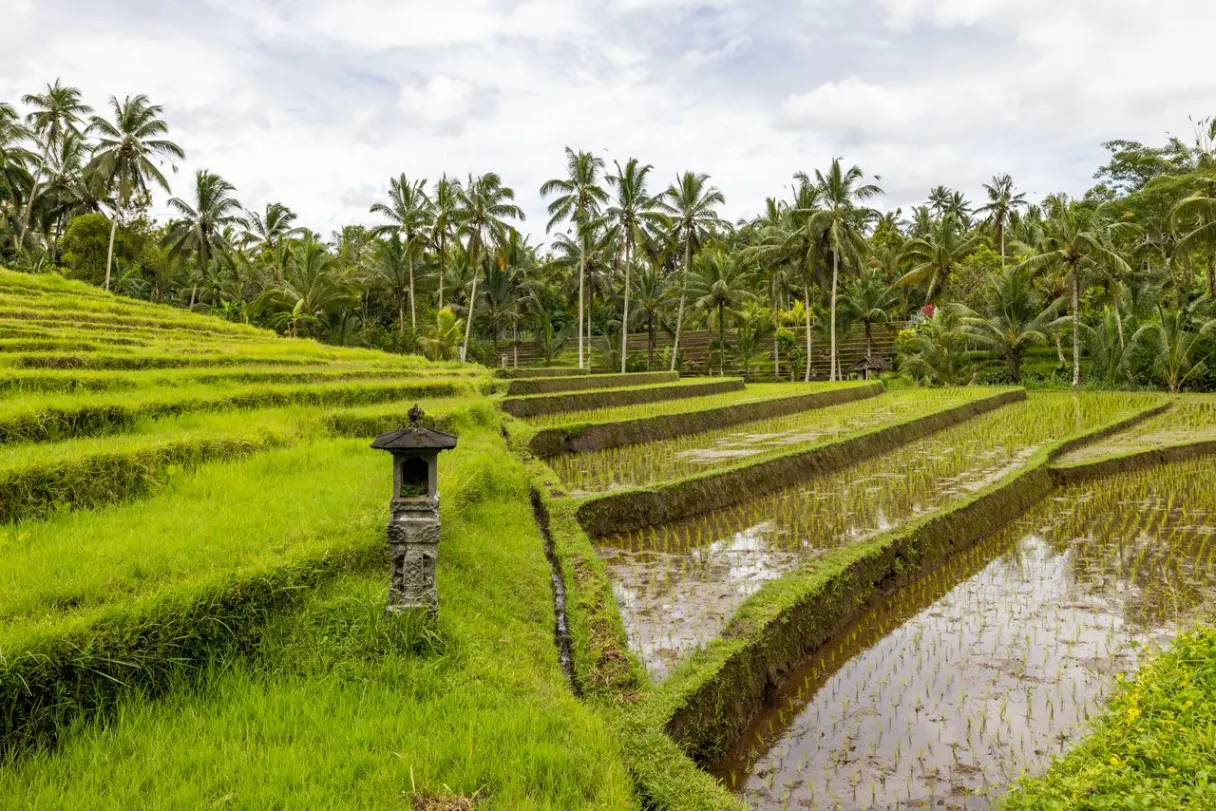

A Ubud day trip works best when you stop treating it like a checklist.
If you are travelling from another part of Bali, Monkey Forest, a rice terrace experience, and one waterfall already make a full sightseeing day. You may have time for one more cultural stop, but adding several temples, swings, coffee plantations, and shopping stops can quickly turn the day into short visits separated by long drives.
Instead, choose a few experiences that give you the mix of Ubud you actually want and leave enough flexibility to enjoy the day at a comfortable pace.
How Your Starting Point Affects the Day
Sightseeing while staying in Ubud is very different from taking a day trip from Seminyak, Canggu, Nusa Dua, or another coastal area.
The main difference is how much of your day is actually available for sightseeing.
If You Are Already Staying in Ubud
If your accommodation is in or around Ubud, you have much more flexibility. You can start with an attraction outside town, return to central Ubud later, take a longer lunch, or split the rice terraces and waterfalls from your town sightseeing.
You also do not need to squeeze the Palace, market, Monkey Forest, and surrounding countryside into one tight itinerary just because they often appear together on “one day in Ubud” tours.
If you have more than one day in Ubud, spreading these experiences out will usually make the visit more relaxed.
If you are trying to decide whether to make central Ubud your main base or split your nights with a coastal town, see our comparison on where to stay in Bali: Ubud vs. Seminyak vs. Uluwatu .
If You Are Coming From South Bali
If you are visiting Ubud from South Bali, think about the full door-to-door day, not just the hours you expect to spend at the attractions.
Traffic can vary considerably. A route that looks short on a map may take much longer once you include the drive to Ubud, travel between attractions, and the journey back to your hotel.
Hotel pickup also does not mean every itinerary works equally well from every part of Bali. A route that feels comfortable from Ubud may involve much more driving from Seminyak, Canggu, or Nusa Dua, so check the route and travel time before booking a waterfall tour.
For a proper day trip from the coast, it is usually better to protect three good experiences than plan six stops and hope the traffic works in your favor.
Build the Day Around Three Core Ubud Experiences
One simple way to plan the day is to choose three different types of experience rather than several attractions that feel similar:
Monkey Forest for wildlife and culture, Tegallalang for the rice-terrace landscape, and one waterfall for nature.
The best order depends on where you start and which waterfall you choose. Tegallalang is north of central Ubud, while Tegenungan is to the south. Kanto Lampo and Tibumana take you farther east.
So there is no single route that works best for every waterfall.
Monkey Forest
Sacred Monkey Forest Sanctuary works well as one of the main stops because there is more to it than seeing macaques.
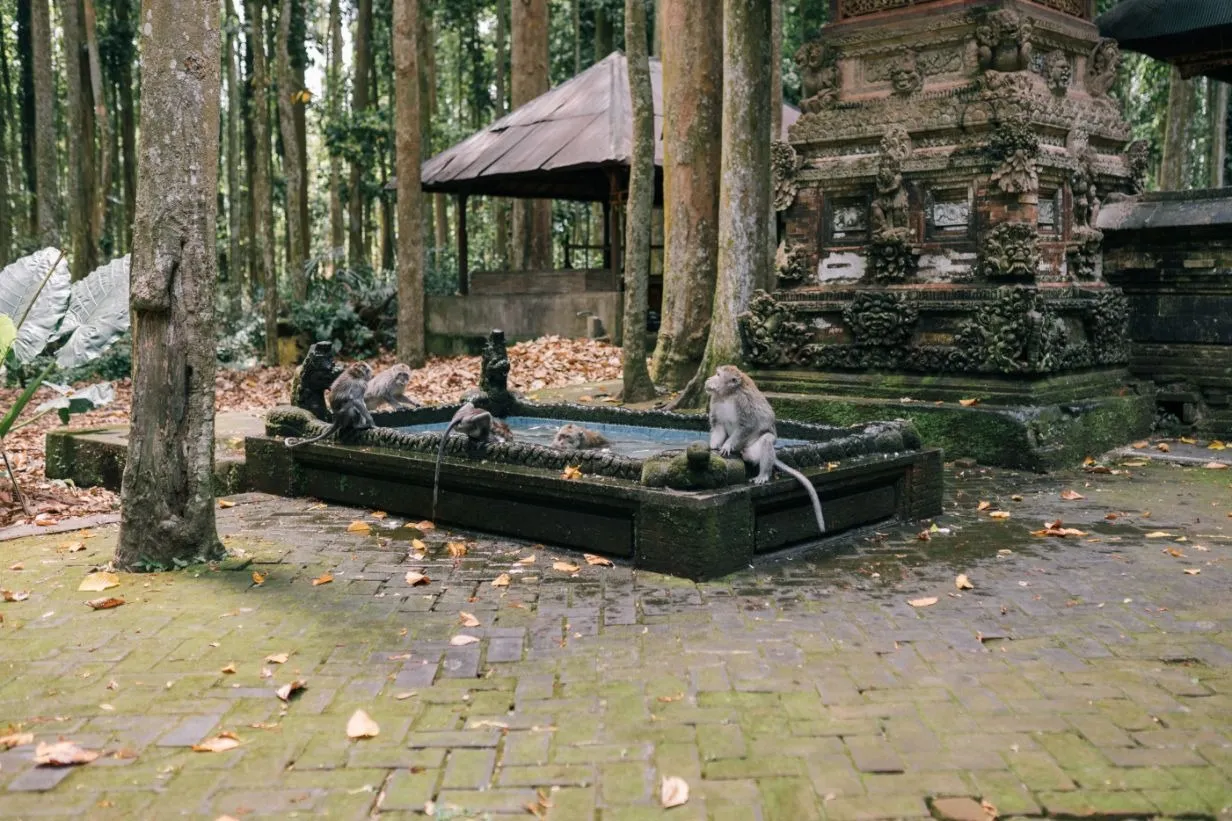
It is also a forest and temple complex in central Ubud, so it gives you a cultural experience that feels different from the rice terraces and waterfall.
Give yourself enough time to walk through the forest instead of treating it as a quick photo stop.
The macaques live in a semi-wild environment, and the sanctuary has specific visitor rules. Its current guidance says not to touch or feed the monkeys, avoid direct eye contact, keep small belongings secure, and stay calm if a monkey jumps onto you. Visitors with children should keep a close eye on them.
If someone in your group is uncomfortable around free-moving macaques, Monkey Forest is also the easiest of the three main experiences to replace with another cultural stop.
You do not have to include a famous attraction simply because it appears on most Ubud itineraries.
The sanctuary currently opens at 9:00 AM, which is also useful to keep in mind when planning the order of your stops.
Tegallalang Rice Terrace
Tegallalang is a practical rice-terrace choice for this itinerary because it is close enough to Ubud to combine with other attractions without turning the day into a separate countryside trip.
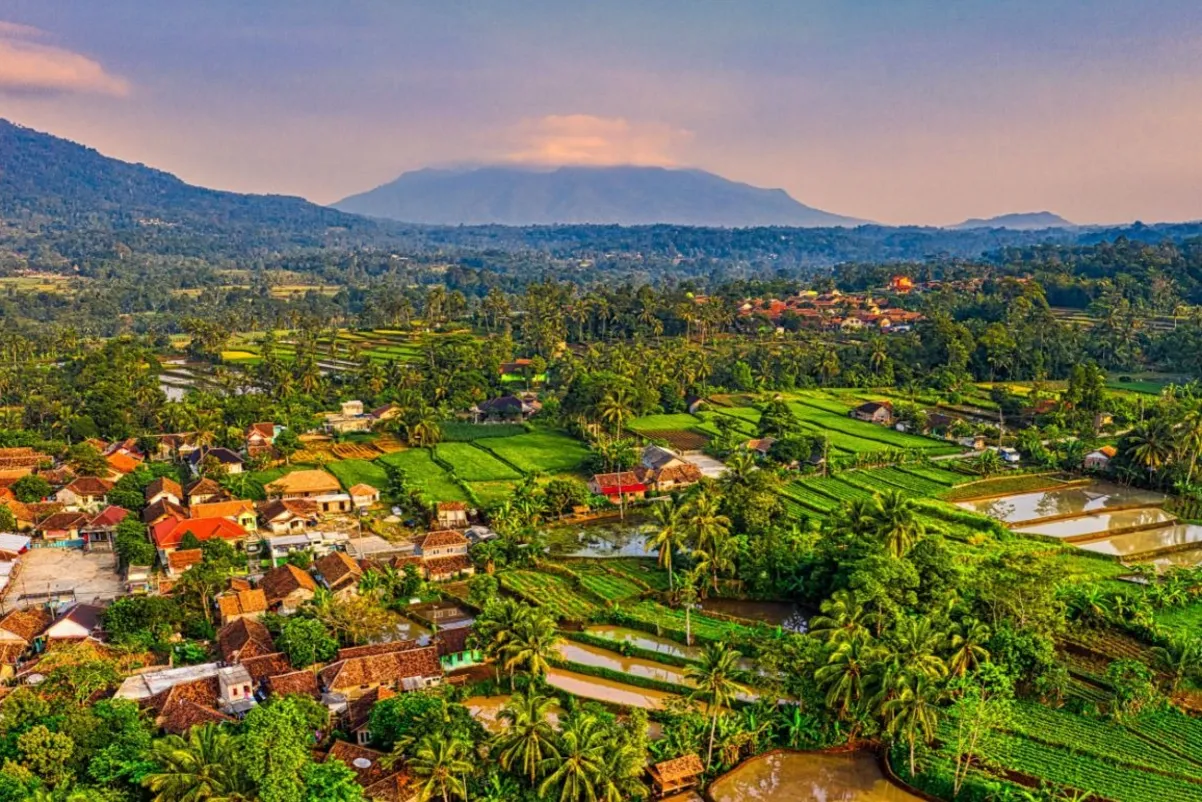
The terraces are north of central Ubud and use Bali's traditional subak irrigation system. Indonesia's official tourism site notes that visitors can enjoy the views from above or walk down into the terraces, with a deeper visit taking much longer than a quick viewpoint stop.
That choice can make a big difference to your schedule.
If you mainly want the views, you can take in the valley and do a shorter walk before continuing.
If you want to walk farther through the paddies, take photos from different areas or spend time at one of the nearby cafés, and allow more time.
Swings and staged photo experiences can also extend the visit. There is nothing wrong with adding one if you genuinely want the experience, but it turns Tegallalang from a simple rice-terrace stop into a longer activity.
It is also worth keeping your expectations realistic. These are working agricultural landscapes, so the paddies will not look exactly the same throughout the year or at every stage of cultivation.
Visit for the landscape and experience rather than expecting it to look exactly like a particular photo you have seen online.
Choose One Waterfall That Fits the Route
You do not need to visit several waterfalls to make the day worthwhile.
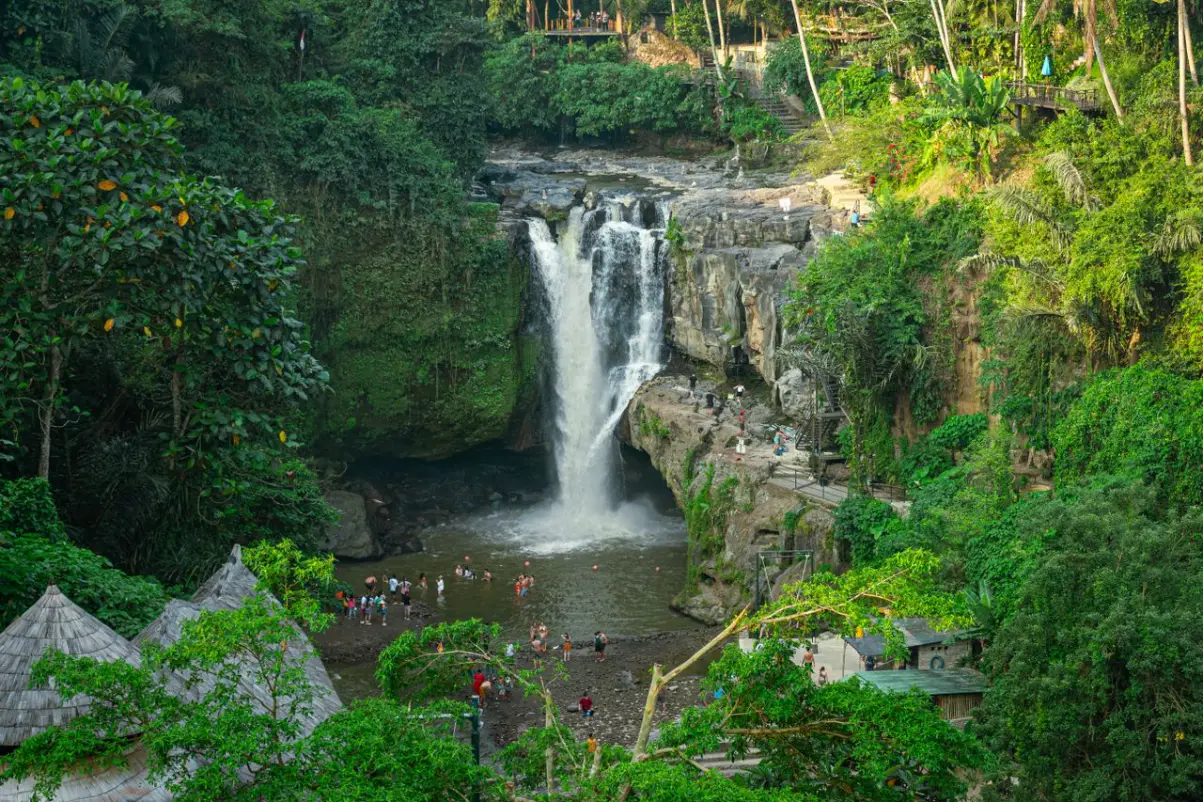
Once Monkey Forest and the rice terraces are already in your plan, one waterfall is usually enough to give the day a different type of experience without making the whole trip about waterfalls.
The more useful question is not simply, “Which waterfall is best near Ubud?”
It is, “Which waterfall fits the rest of my day best?”
|
Waterfall |
Makes the most sense if... |
Main trade-off |
|
Tegenungan |
You want a well-known, powerful waterfall that fits relatively easily into a route from the south |
It is popular and developed, and visiting the base still involves a substantial climb back up |
|
Kanto Lampo |
You like its tiered rock formation and want a relatively compact waterfall visit |
Much of its appeal is the tiered rock setting and close-up photos; wet rocks are part of the experience |
|
Tibumana |
The waterfall itself is an important part of your day and you are happy to spend more time there |
It takes you farther east and involves a longer walk than the easiest alternatives |
For many travellers coming from South Bali, Tegenungan is the simplest option logistically.
It sits south of Ubud in Gianyar and has developed stair access rather than a long jungle walk. Indonesia's tourism authority describes it as easily accessible from Ubud, although reaching the base still means walking down into the gorge and climbing back up afterwards.
Tegenungan is convenient, but that does not mean it is quiet. If your main goal is to include a waterfall without making a large detour, the trade-off may be worth it.
Kanto Lampo is quite different.
Instead of one large drop, the water flows over a tiered rock face. Access is relatively straightforward, but much of its appeal comes from the rock setting and the opportunity to get close to the cascade for photographs.
If that particular photo does not interest you, there may be little reason to choose Kanto Lampo just because it appears on many Ubud tour itineraries.
Tibumana makes more sense if you want the waterfall to be a bigger part of the day.
Reaching it involves roughly a 15-minute walk with steps and surfaces that can become slippery. The extra time may be worthwhile if waterfalls are a priority, but it is less convenient if your main aim is to fit three different Ubud experiences into one efficient day.
You do not need to choose the waterfall with the biggest name or the most dramatic photos.
Choose the one whose location, access, and overall experience work best with the rest of your route.
Is There Time for One More Stop?
Possibly, but this is where many Ubud itineraries start to become too busy.
If your first three stops are going smoothly and you still have time, use it for one experience that adds something different.
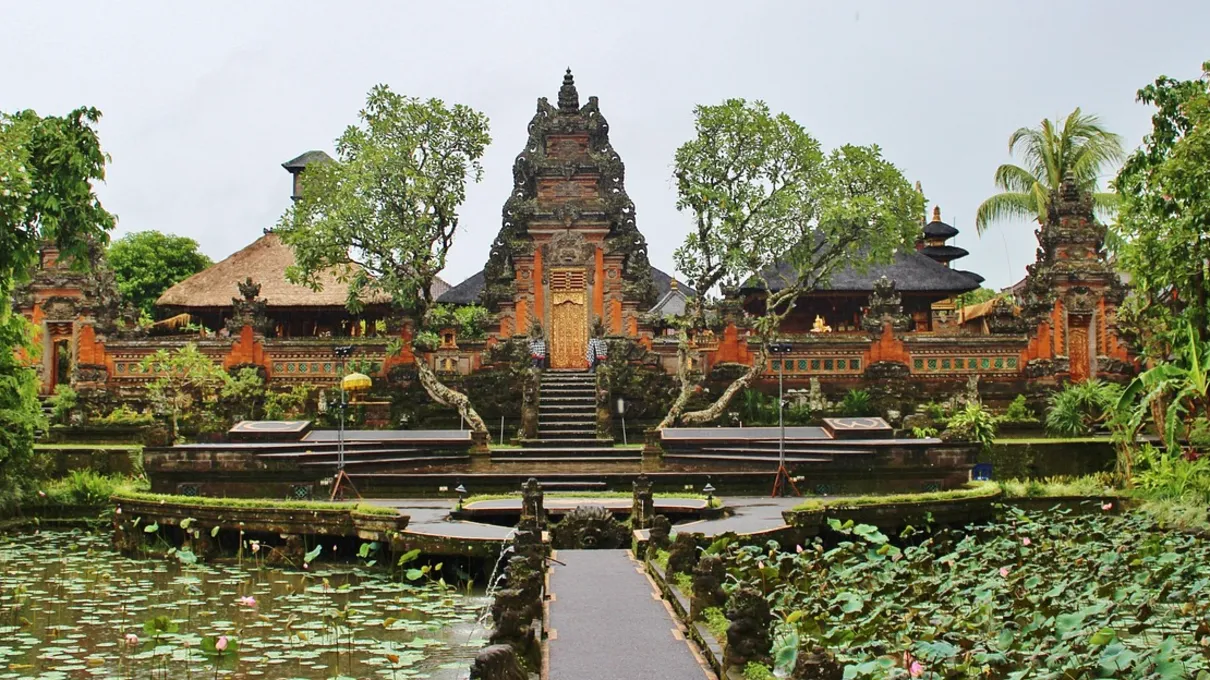
A cultural stop can work well if temples or Balinese history are important to you. Depending on your route, you could spend some time in central Ubud or visit one temple that fits naturally with the direction you are travelling.
What makes less sense is automatically adding a temple, coffee plantation, swing, craft village, and shopping stop simply because they are all included in a packaged tour.
The same goes for coffee tastings and swings.
They can be enjoyable if you actually want to do them, but they are not essential parts of a Ubud day trip.
If a swing is something you have been looking forward to, make time for it and accept that another stop may need to go.
If you would only be doing it because your driver or tour happens to stop there, you may enjoy the day more by spending that time somewhere you deliberately chose.
For an honest breakdown of which popular stops live up to the hype and which you can safely skip, check out our guide on touristy things to do in Bali .
What Is the Best Way to Get Around on a Ubud Day Trip?
The attractions on this route are spread across central Ubud and the surrounding countryside, so your choice of transport can affect the day almost as much as your choice of stops.
Private Driver
A private driver is often the most flexible option if you already have a rough idea of the places you want to visit.
You have one vehicle for the whole day, can leave some belongings in the car, and can usually adjust the route if one attraction takes longer than expected.
This can be especially helpful for families or groups travelling at different speeds.
However, private transport does not always mean a fully guided or completely flexible tour.
A private driver, driver-guide, and dedicated tour guide can all mean different things. Some drivers mainly provide transport, while others also guide at attractions, and a private booking may still have agreed hours or a fixed route.
Check what is actually included rather than assuming everything from the word “private.”
Organized Day Tour
An organized tour may suit you better if you prefer having the itinerary and transport arranged together.
It removes much of the planning, especially when several stops or tickets are involved.
The trade-off is that a fixed tour may include places you are less interested in or give you less control over how long you stay at each stop.
Before booking, look at the actual stop-by-stop itinerary, not just a title such as “Ubud Highlights Tour.”
A tour focused on Monkey Forest, a rice terrace, and a waterfall can work very well for this kind of day.
A tour that also includes several shopping stops, coffee tastings, and photo attractions may feel completely different, even if both are advertised as full-day Ubud tours.
Arranging Transport Between Stops Yourself
You can arrange individual rides between attractions, especially if you are staying in Ubud.
It becomes less convenient once your route moves farther into the surrounding countryside.
You need to arrange another vehicle after each stop, work out suitable pickup locations, and keep an eye on availability as you move through the day.
For one or two attractions, that may be perfectly manageable.
For Monkey Forest, Tegallalang, and an outlying waterfall on the same day, having transport available for the whole circuit is usually easier.
How Physically Demanding Is This Ubud Circuit?
None of these attractions looks especially demanding on its own.
But doing them all in the same day can be more tiring than you expect.
At Monkey Forest, you will spend time walking through a large forested sanctuary.
At Tegallalang, there is a big difference between enjoying the terraces from above and walking down into them.
At a waterfall, walking down towards the water normally means climbing back up afterwards, often on wet steps.
Tegenungan, for example, has developed stair access rather than a long trek, but the climb back up is still the harder part.
Tibumana has a longer approach along steps and paths, while Kanto Lampo involves wet and potentially slippery rocks if you want to get close to the cascade.
Then add Bali's heat and humidity, getting in and out of the vehicle several times and the journey back to your hotel.
A three-stop sightseeing day can already feel quite full.
This is especially important for families with young children, older travellers, and anyone with limited mobility.
Instead of rushing through every attraction just to keep the original itinerary, it is usually better to remove one demanding stop and enjoy the others properly.
For example, someone who is comfortable walking through Monkey Forest but wants to avoid a long stair climb could enjoy Tegallalang from the upper viewpoints and choose a waterfall with less demanding access.
You do not need to do the longest or most difficult version of every stop.
What Should You Cut If the Day Starts Running Late?
If your Ubud itinerary starts falling behind schedule, you do not need to turn the rest of the day into a race.
If you added a fourth cultural or sightseeing stop, cut that first.
The same goes for a swing, coffee tasting, or shopping stop that was never a main reason for taking the trip.
If you are running much later than expected, reconsider the core route instead of trying to save time by spending only 20 minutes at every attraction.
Ask yourself which experience you would be least disappointed to miss.
For one person, that might be Monkey Forest. For someone else, it might be the waterfall.
The three-stop route is only a useful starting point. You do not have to complete all three regardless of how the day is going.
The waterfall is particularly worth reconsidering if reaching it still involves a large detour, your group is already tired, or rain has made the paths and water conditions less appealing.
Waterfall conditions can change after rainfall, so access and swimming conditions are better checked on the day rather than assumed from photos or a tour itinerary.
What you should avoid is keeping every stop and simply rushing through them.
When Is Staying in Ubud Better Than Doing a Day Trip?
A day trip works well if your priorities in Ubud are fairly focused.
If you mainly want Monkey Forest, the rice terraces, one waterfall, and perhaps one additional cultural stop, you can get a good introduction to the area without changing hotels.
Staying in Ubud starts to make more sense once your wish list gets longer.
If you want to explore central Ubud without constantly checking the time, visit several temples or waterfalls, spend longer in the countryside, or add activities such as cycling or quad biking, those experiences all compete for the same hours.
At that point, the issue is no longer how to fit more into your day trip.
You simply want more from Ubud than one day can comfortably provide.
If your Ubud list grows beyond three or four substantial experiences, spending more time in Ubud is usually a better option than adding more stops to the same day.